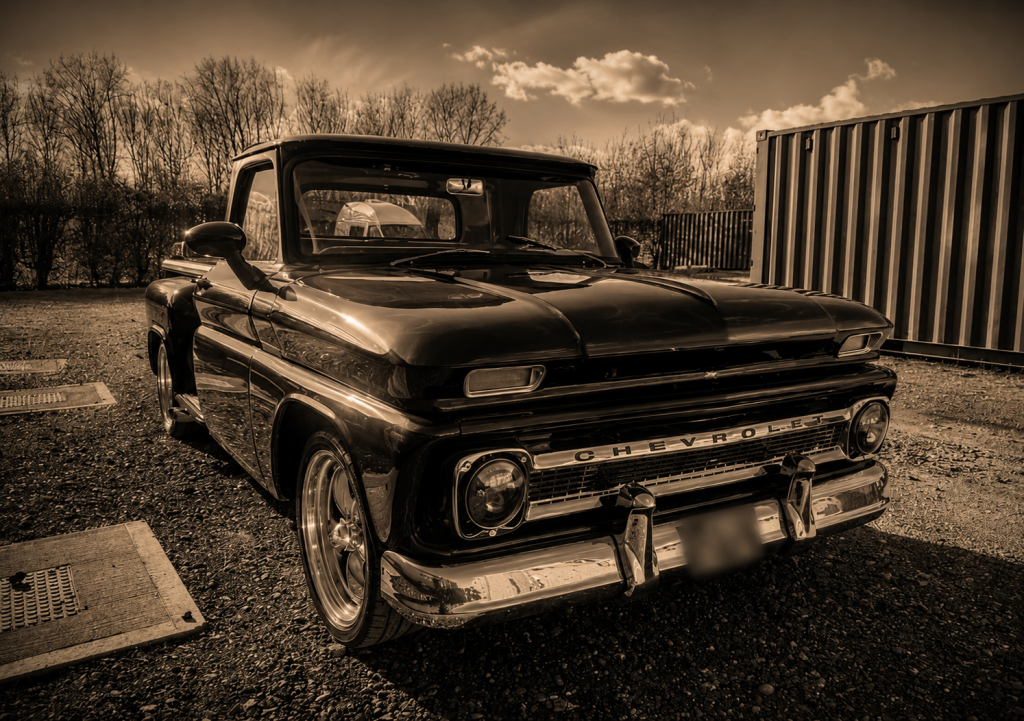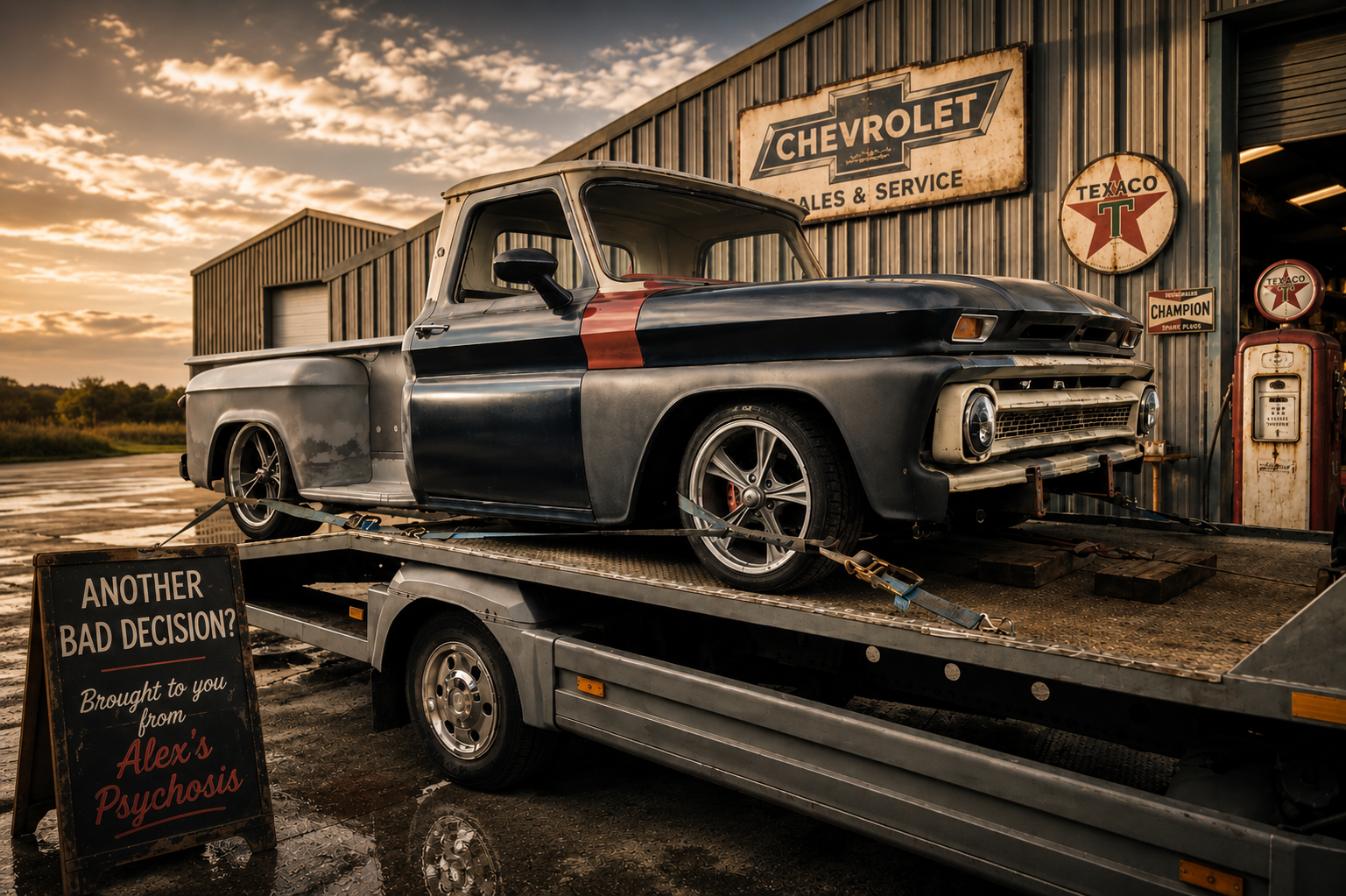
This piece is inspired by the completion of my latest work project. And, I hope that someone out there might find it useful to peruse, if considering embarking on the restoration or modification of a classic car. We might cover a number of aspects here – but mostly, it’s real, lived experience from the perspective of the man that built the damn thing.
You’ll get here, the reality. Not a dream sold to you by a suspiciously well spoken man in a tweed jacket with elbow patches – but the reality of engaging in a restoration. Real timelines. Real frustrations, but real triumph, too.
First off – a bit about me. I’m good at my job, as bold as that may sound. Nearing twenty years now in the classic car restoration game, having restored a number of British classics professionally – Triumph TR4, 5 and 6’s, E Types, big Healeys, small MG’s as well as an award winning 1989 Range Rover Vogue. I grew up in, around and underneath classic cars. I’ve borne witness to multiple restorations by other outfits, helped along the way in a number of cases. And every. Single. Time. it follows the same pattern.
A year long timescale of a restoration looks something like this:
- Months 1-3: we’re off. Spec and scope agreed. Disassembly, parts catalogued, shell may be blasted, progress is tangible and rapid.
- Months 4-6: in the case of the Chevy, the ‘dry build’ happens here. In most cases, it’s reconstruction phase. The rot is three times as bad as you thought it was, and repair panels never, ever fit. Cue much swearing, welding burns, slippage and scope creep.
- Months 6-9: If your buttons are done up, chrome and trim happens here, alongside any upholstery work that can be carried out alongside what you ought to be doing in the workshop. This could be prep and paint.
- Months 9-12: The paint will be late. The trimmer won’t have quite finished, and the poor mechanic will be chewing his fingernails off, knowing that the deadline has been and gone. Seeds of discontent are sown here, as the bills inexorably pile up, and the client struggles to see what he’s got for his money.
- Months 12-15: The mechanic gets the opportunity for some heroics, as engines are swinging from cranes, the big stuff starts getting bolted on and the car starts to look like, well, a car… The knot in the clients stomach eases a little, although painful, the end is surely in sight.
- Months 15-18: Impatience sets in. We’re all aware the clock is ticking, made worse because it actually looks like a car here. Tantalising, tempting… We’re all exhausted. Our eyes close at night we all see the silhouette of the car inside our eyelids.
- Months 18-21: Snagging. Snagging. Replacing new parts that don’t work, with cleaned, polished, refurbed or reengineered old ones that somehow are still superior quality. Swearing, impatience, scope creep and regret creep in. The handover of the project is spoiled by missed deadlines and never quite enough time to settle the car down. A few weeks of back-and-forth between the workshop and the owners home, before Winter and a sheet is thrown over the car until next spring. When it will require recommissioning.
Sold yet?
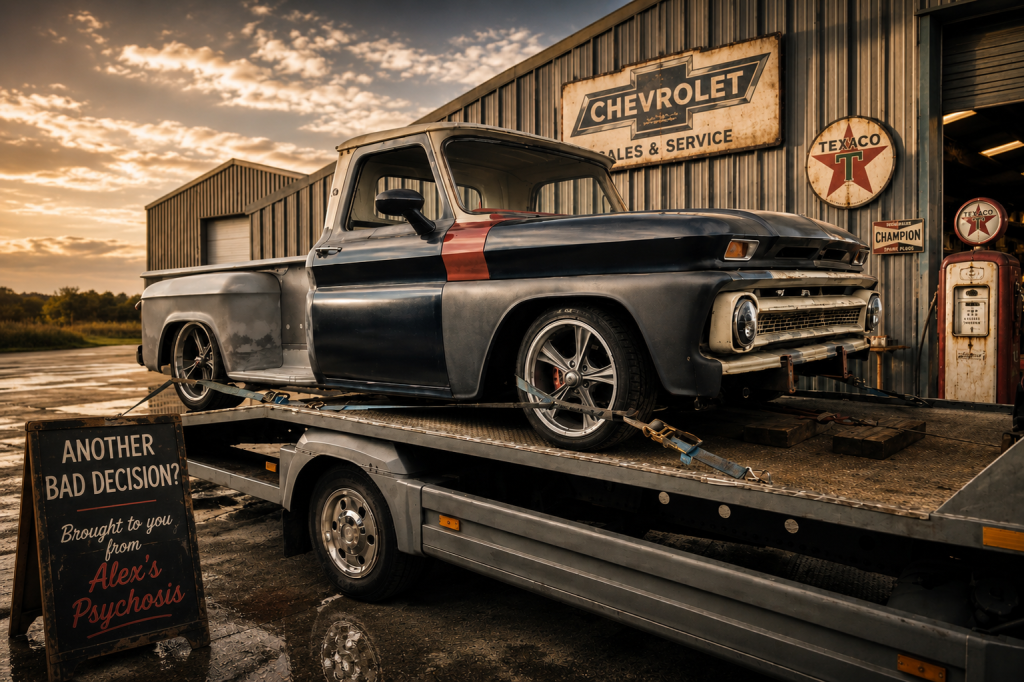
No, nor would I be on the face of it. Every day the car is away from home is a problem, however necessary. It would be better to think about a car restoration in the same way one might contemplate a house restoration. Smaller in tangible size, but intricate to make up for it. A similar range of skills required but far, far less margin for error – you see absolutely every detail. And, the older the house, the more bodges there are to undo. The more rot is hidden.
The more bespoke you go, the more complex the job. Every additional component needs a bracket. Everything electrical needs another wire. Or two. Or five. And every individual wire needs cutting, soldering, heat shrinking, routing and terminating. Timescale? First thing to go out the window. Closely followed by the budget as we, the willing, led by the unknowing, doing the impossible for the ungrateful, do so much with so little for so long, end up qualified to do anything with nothing… Something like that, anyway!
I should go on record and say that Mr C10 is respectful, appreciative and understanding of what I’m doing here, if a little… Tired, now.
But.
To consider a restoration in purely the black and white would be to miss the point: it lives and dies in the grey. There is another truth, that every. Single. Car. That I’ve been involved in the restoration of, is rarely just that – a car.
It’s a moment in time. A realisation of a dream. A connection to a time or place that meant something. Cars, to car people, are more than just a heap of wires and metal used to make commuting easier. They capture the essence of something – either a nostalgic throwback, or an extension of our personality. You can, in fact, tell a lot about a person by their car. Even if it’s a ‘white good’ car to the point it’s a statement – you don’t care about cars, therefore we can infer you are pragmatic, apathetic or (whispers) boring. Your car is a mirror – think about that, and look outside onto your driveway – what does your car say about you?
A Morris Minor. Characterful, cheerful, full of charm.
A Jaaaag. Loveable rogue. Falling apart.
A Land Cruiser. Farmer.
A Land Rover. Wanting to look like a farmer.
An Isuzu D-Max. Actually a farmer.
A Lamborghini. Powerful. Rich. Not very well endowed.
Every single car is a statement, whether you like it or not. Even a car that is ‘image free’ is telling everyone you ‘don’t care about your image’.
The Chevrolet C10 is in fact, the realisation of a childhood dream, where a similar car sat on a corner near to where the owner lived. Built to be the wildest, most extreme form of hot rod it could be, the brief was non-exhaustive, from the LS3 engine to the replica Winchester hanging behind the drivers head.
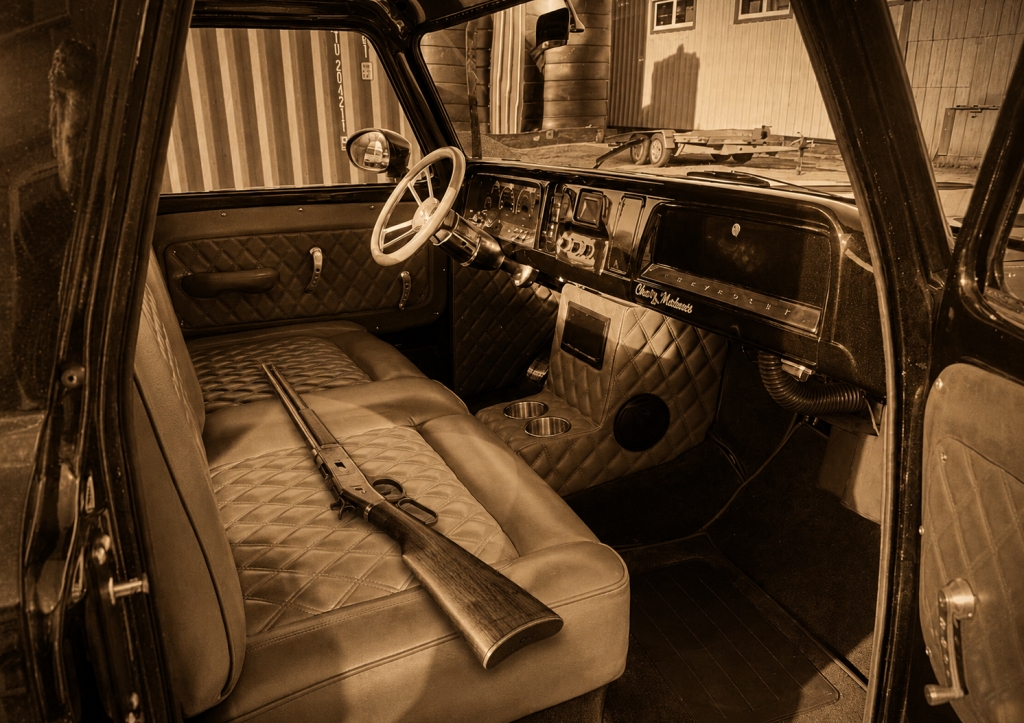
The finished product is stunning. But the middle bit, was serious graft. Testing my skills and abilities to the absolute limit – I picked the job up after the previous builder had stalled the project. The challenges there were unimaginable – not knowing where the previous builder had finished and we were to begin, how much had he finished ‘properly’, how much needed remaking? Fortunately, the quality of the workmanship was very high. But unfinished – so it left me with some of the tricky still – making wiring looms from scratch, commissioning the air suspension system pre and post build. One particular challenge that will be burned into my mind forevermore, was mating the late Corvette power steering pump to the vintage spec power steering box. Necessary because the parts had already been purchased, they were expensive, imported from America (lead time becomes an issue) and a mismatch, resulting in overpowering the steering box and blowing the bottom out of it. I had to design and make an adjustable, external pressure relief system… Routing through and oil cooler, a swirl pot and a complex network of high pressure hoses necessary to reduce pressure and prevent cavitation. For a power steering pump!
Can you see how this fits into my year-long timescale?
The latest component failure is the (customer supplied) inadequate and poor quality, Chineseium suspension compressors failed and dumped the truck on the floor. So, I’ve upgraded to Discovery 3 spec items – two of them – necessitating all new pipework, wiring through relays and recalibration.
The speedometer – another adventure, it took me a little longer than it should have to understand that the factory loom and sensors do not support a speedometer input, so grafting in a GPS sensor was the order of the day…
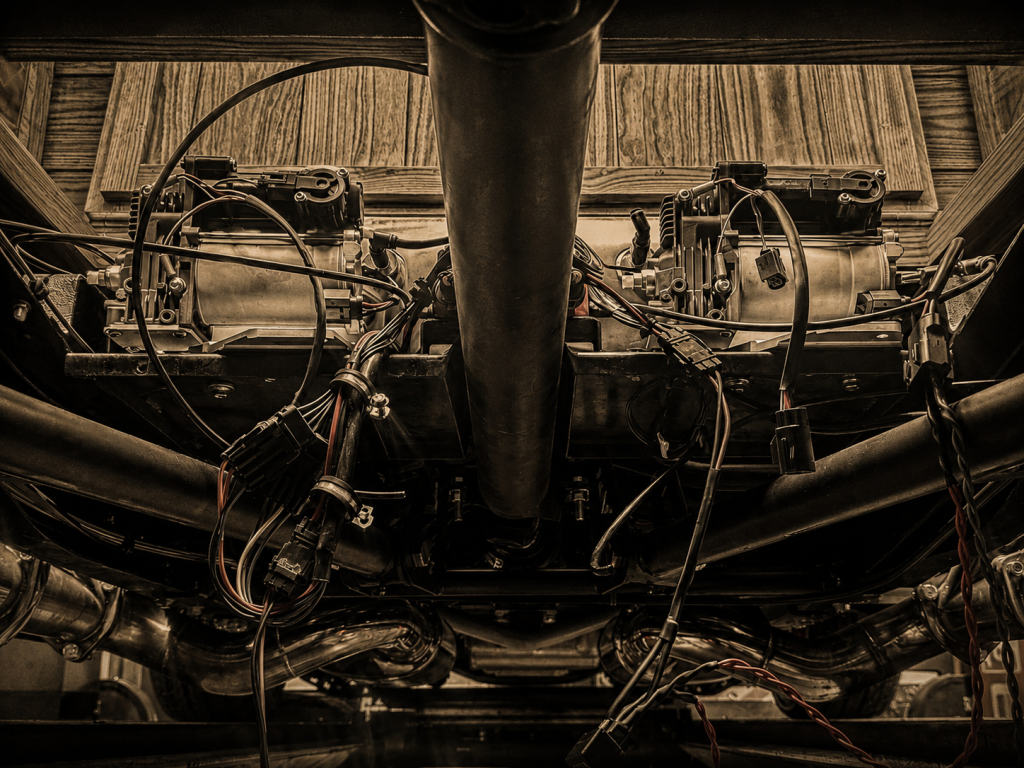
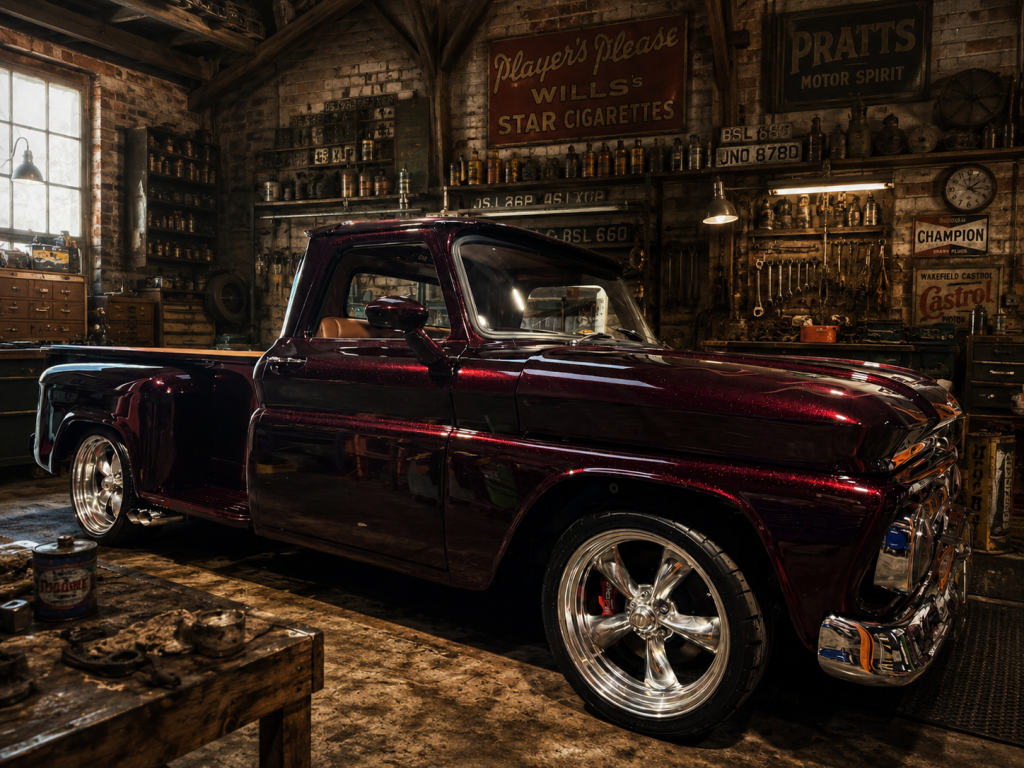
On the road? It’s absolutely insane. Over 500bhp with next to no weight on the rear. Mad, candy red paint, 22 feet long, ghost flames on the bonnet and switchable exhausts from loud to AC/DC-at-full-tilt-playing-in-your-bedroom, it’s going to be noticed. What might not be noticed are the details I’m most proud of. The epic wiring loom that you can’t see. The bespoke brake pipes, the stainless steel fasteners, the hours and hours on wiring – did I mention that? My work has mostly been like your home broadband. It’ll be doing its job if nobody talks about it, in the end.
What I hope they do talk about, is the bespoke buck liner where every strip of wood is cut from the same grain – so wheel arch liners and hatch for the air suspension servicing all follow.
It’s a rare thing for a machine like this to exist based on decisions that my own tired, worn out hands made along the way.
We’re there now. To consider only the time and the money would be to miss the point of restoration – to bring a dream alive. To connect the owner with a moment in history. To wear, as a badge of achievement for how far he has come in life to enable such a thing. It’s amazing. Truly, it’s been a pleasure.
It is, however, time for it to go home. Let some other car can occupy the inside of my eyelids for a while.