Category: Motor Trade

  • Should You Invest In A Classic Car?

    Should You Invest In A Classic Car?

    No.

    That was easy. Next…

    Okay, okay. Worn out, mentally and physically broken, tired mechanic writing here. But I’ll do my best to expand.
    In my childhood, my ol’ man bought a series 1 E Type, 4.2 roadster in what should have been pristine condition for ten grand. He put it through the workshop, sorting through the mechanical, electrical and cosmetic imperfections. Sold it for about twenty five thousand pounds.

    And made a loss, of something like eight or nine thousand. The interim work took nearly a thousand hours, parts, trim, paint and materials. The car, like so many others, was hiding a good deal of rot and crash damage behind the suspiciously shiny coat of paint that could not possibly have been identified at purchase.

    An expensive roll of the dice then for him, but the next owner within about fifteen years had an immaculate example worth about a hundred grand.

    A profit of £75k, and all with the fun of owning the most beautiful car ever made?

    Well, he should have done a little better than my poor old man did, but all is not as it seems.

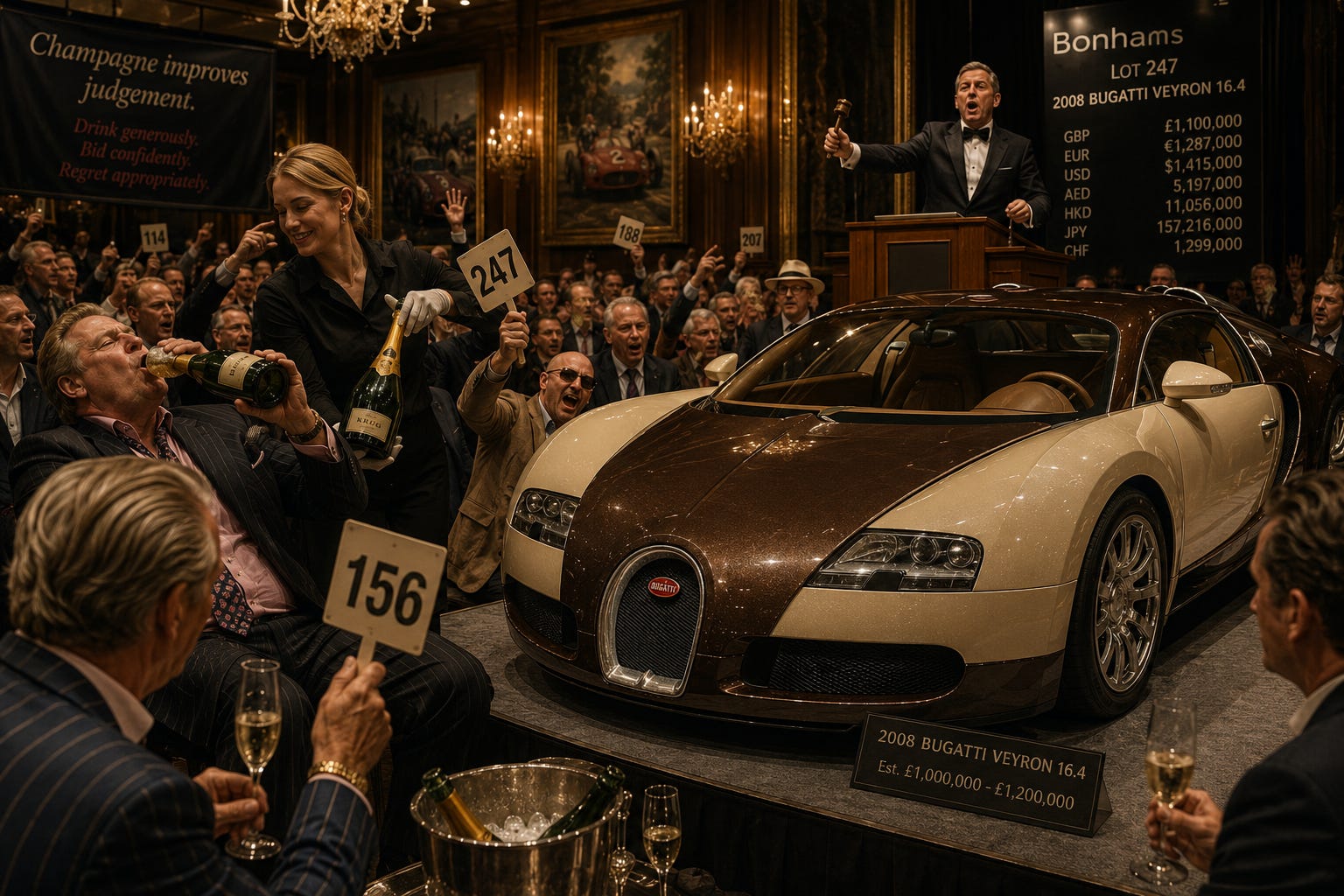
    Classic cars suffer the same accounting trick as horses. In the intoxicating auction room (literally in lots of cases, you’ll be plied with all the champagne you can consume to loosen up your bidding arm), everybody forgets about the bit in between purchase and sale. And that looks something like this…

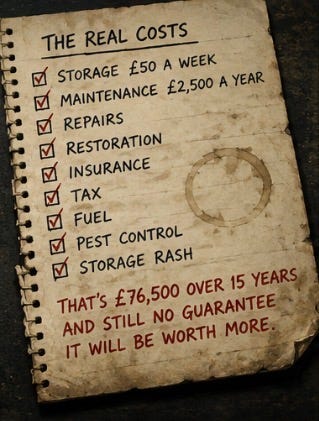
    • Storage. You wouldn’t leave £5k, £50k or £100k in cash in a heap on your driveway open to theft, the weather and carelessness, so don’t be thinking that’s good enough for your car. The thing is, if you cover it, it deteriorates where you can see it. If you don’t cover it, it deteriorates out of sight. You’re going to need a garage, or professional storage that on average, is going to cost you £50 a week.
    • Maintenance. Cars move, and wear up. Cars sit still, and seize up. Assuming all things being equal, you’re going to have to budget £2500 per car, annually, for servicing and maintenance. You might think you’ll be lucky and get away with it, but with a fragile, underdeveloped classic made from perishable materials, I promise you, there will always be ‘something’. Fuel systems particularly suffer with the higher concentration of ethanol we have to cope with these days. 
    • Repairs. The E Type hiding an inch of filler (bondo, for any American readers) manifested itself by microblisters forming in the paint, the tip of the proverbial iceberg. Classics have a nasty way of concealing suprises like this, and it’s almost impossible to foresee. These things have, by definition, had a life of at least twenty five years – in the case of modern classics, that’s about twenty years beyond design life. So expect the unexpected.
    • Restoration costs. Spiralling costs of absolutely everything has a huge knock-on effect on the cost of restoration. Long gone are the days of a ten grand rebuild – think closer to a hundred thousand for a full nut and bolt rebuild of just about any car, with costs rising rapidly for anything unusual, specialist, weird and wonderful.

    If my calculations are correct, assuming maintenance and storage costs, that’s a cost of £76,500 over the fifteen year period, and a net loss of £1500. Store it in your own garage, you say? Insurance. Tax. Fuel. Pest control. ‘Storage rash’ (expensive paintwork damage caused by careless movements around the car). You aren’t that much better off.
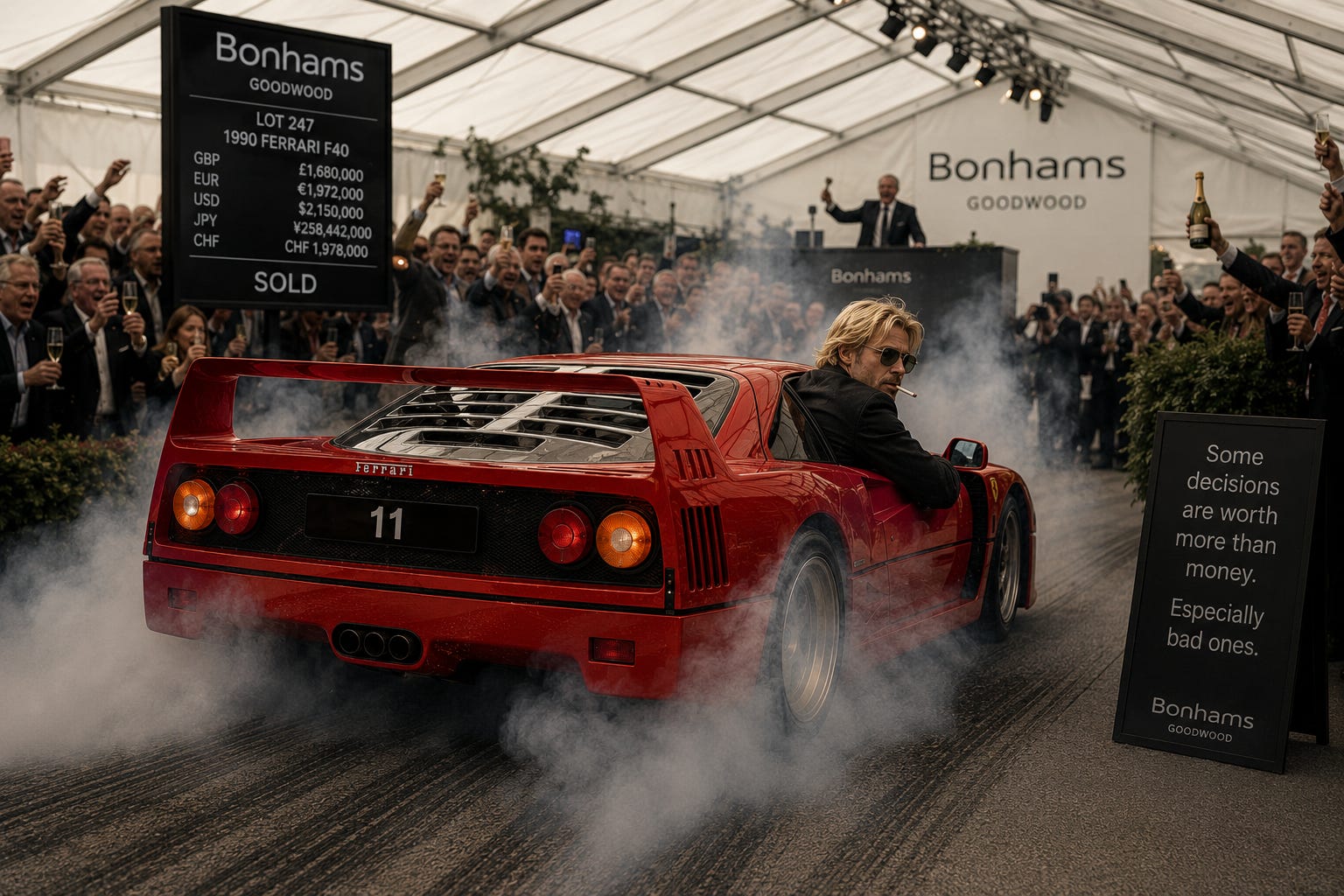
    Occasionally, you might get lucky. It’s only really the top end of the market – the playground where Arabian oil princes bid against each other with limitless budgets to secure exclusivity – that moves enough to compensate. A Ferrari F40 can be bought for around £1.5/2m now, and it will be a £5m car in my lifetime.

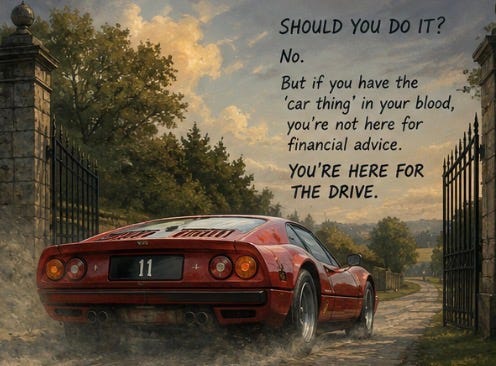
    Should you do it? No.

    I do get it though. Cars to me, are moments in time. The sound of a Sierra power steering pump straining at full lock takes me back to happy times navigating a train station car park. The smell of exhaust fumes and the sound of an off-beat V8 still makes the hairs stand up on my arms.

    If, like me, you have the ‘car thing’ in your blood and under your skin, here’s some advice that might make the road to ruin less rocky.
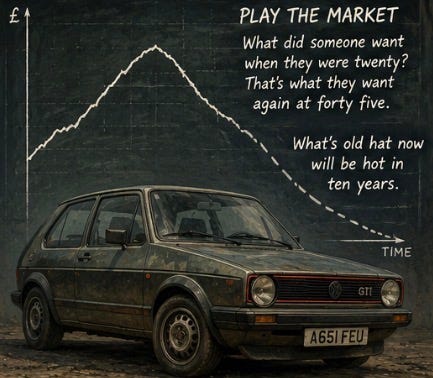
    • You can predict quite easily which cars at ‘our level’ will rise and fall. What did someone who is forty five now, want when they were twenty? That means, climbing now are hot hatches. I actually had a ropey old shed of a Mk1 Golf GTi that I bought for about £300, ran it out of test and sold on for spares. That very car would be a £5k machine now, as saggy as it was. If you want to get ahead of the curve – get hold of the kind of cars I used to play with on the PlayStation. Colin McRae Rally, Need for Speed and all that will be good for Impreza and Evo’s. I also believe in what I’ve called the ‘Top Gear’ effect. Who would have thought an original Peel P50 would be worth £120,000 now? The Renault Avantime, Toyboata-era Hilux and even the Lexus LFA (which I guarantee you wouldn’t have made any fuss about if Clarkson hadn’t liked it) are all good tips I reckon. Even my beloved L322 is ticking up in value because he called it ‘the best car ever made’, and mine isn’t even the desirable one.
    • Play the market to your advantage. If you want to predict those that fall, it’s cars that belong to the generation that are ageing beyond being able to cope with them. Iconic British cars for the generation above mine are all taking a hit now – Big Healeys, Astons and Jags, that E Type that was worth about £100k seven or eight years ago has probably halved now. Bad news for current owners, good news for aspiring owners. Really good news for strange younger folks like me, with my strange affection for Riley RME’s. I’m rather hoping you’ll be able to get a good one for about £5k in a few years.
    • Always buy the best you can. I’d never personally restore a car, or commission a restoration. You’re going to lose it for over a year, and the cost will be approximately the GDP of the UK. Far better, to buy the very best you can, and if you want to tailor it, then by all means do. For example – one day, I will have a Triumph TR6. They’ve softened a bit too, and they’re all £25k now – on the basis that a minter is £25k, a £20k car needs £5k investing in it, a £15k needs £10k and so on. Whatever the car, spend another couple of thousand at purchase than another ten down the line.

    Appreciate them for what they are. Don’t expect your old car to behave like your daily, especially if your everyday car happens to be powered by electricity. With all the modifications in the world, you can’t undo poor build quality, old school materials and designs – you’ll only be disappointed by trying. Make sure you can cope with heavy steering, advisory brakes, the smell of unburnt fuel and more frequent maintenance required. By and large, the market respects originality too. So many owners invest huge sums of money to make ‘RS Replica’ or ‘Evocation’ cars from original examples, and slash their value as a result. I’m not really a purist, I respect everyone’s impression of what their car should be… But most don’t.
    And for gods sake, drive it. It’ll thank you for it. Engines need oil circulation, brakes need using, fuel needs burning. Most of the cars I work on suffer from lack of use these days, rather than wearing out.

    The cars we love are also increasingly becoming like horses, as they became in the post-war era. Once commonplace, now owned by a few well-heeled individuals. We have the investment market to thank for incredible events that celebrate cars, like Goodwood – but it’s sad, really, that thoroughbred cars that once charged past in dual carriageways making boys and men smile, now rarely see the light of day. My Dad used his Escort Cosworth every day, and it now sits beautifully restored, behind a velvet rope in a museum. Like a stuffed sabre toothed tiger.

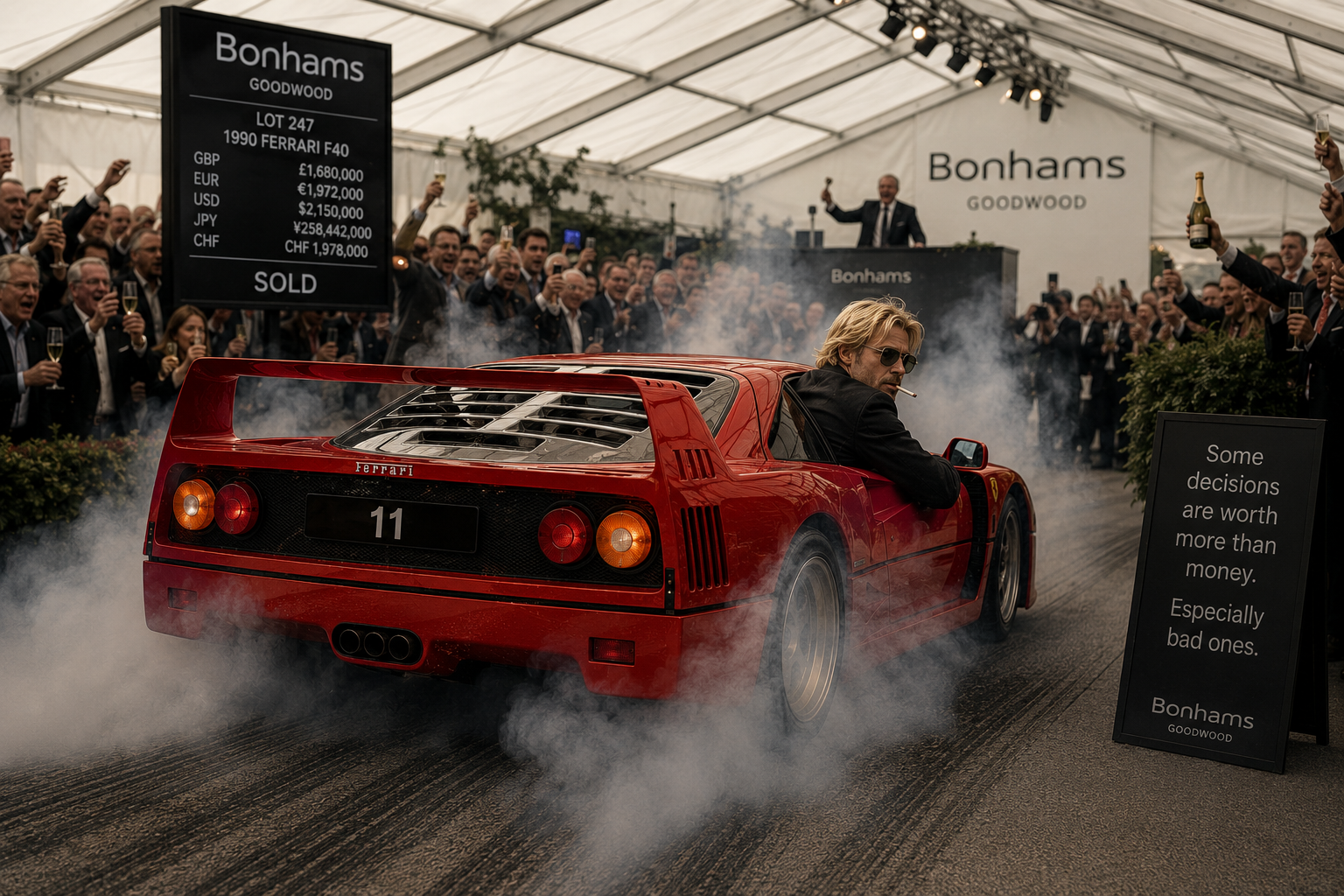
    You’d better hope I don’t win the lottery, or I’m going to buy an ultra low mileage Ferrari from a collectors auction, and leave a big, black number eleven in the exit doorway as I drive home.
  • What To Expect When You’re (Managing) Expect(ations) – The Restoration Game

    What To Expect When You’re (Managing) Expect(ations) – The Restoration Game

    This piece is inspired by the completion of my latest work project. And, I hope that someone out there might find it useful to peruse, if considering embarking on the restoration or modification of a classic car. We might cover a number of aspects here – but mostly, it’s real, lived experience from the perspective of the man that built the damn thing.

    You’ll get here, the reality. Not a dream sold to you by a suspiciously well spoken man in a tweed jacket with elbow patches – but the reality of engaging in a restoration. Real timelines. Real frustrations, but real triumph, too.

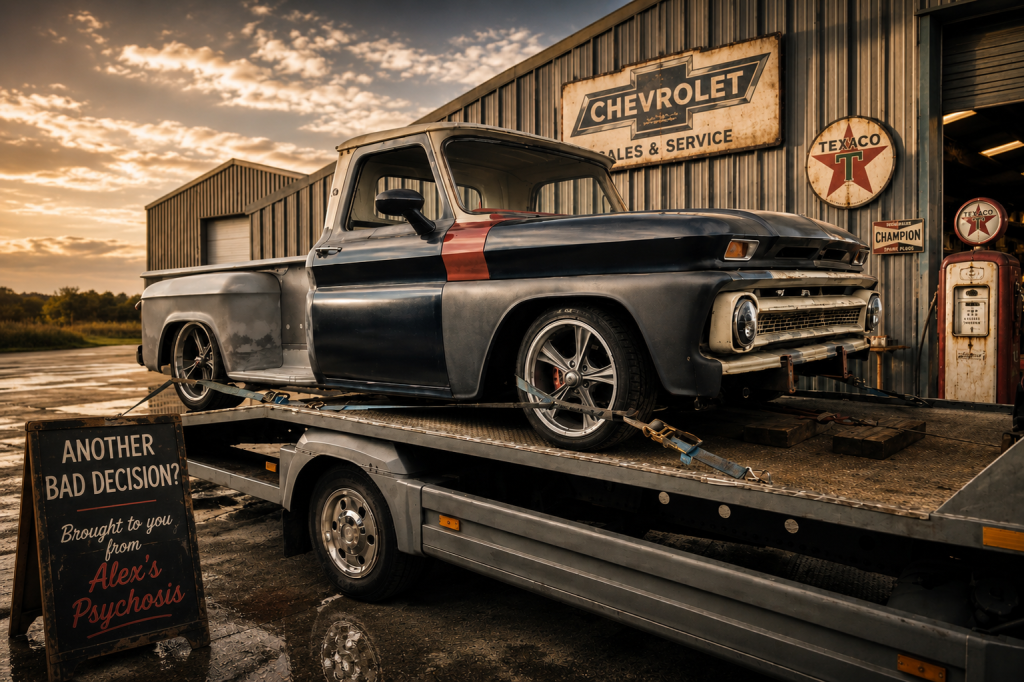
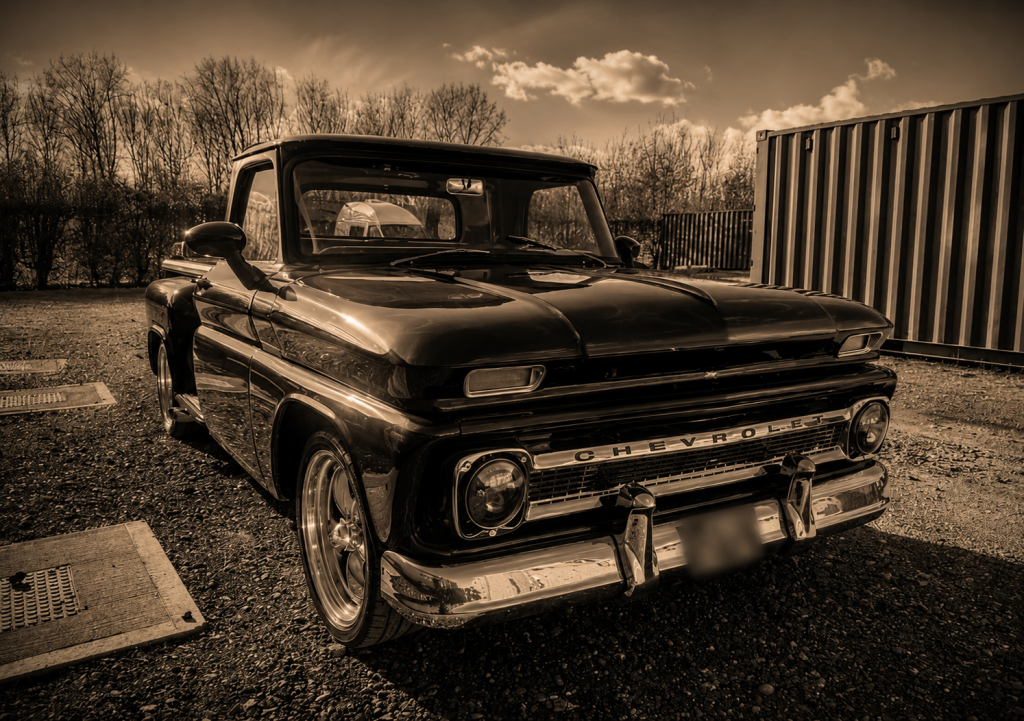
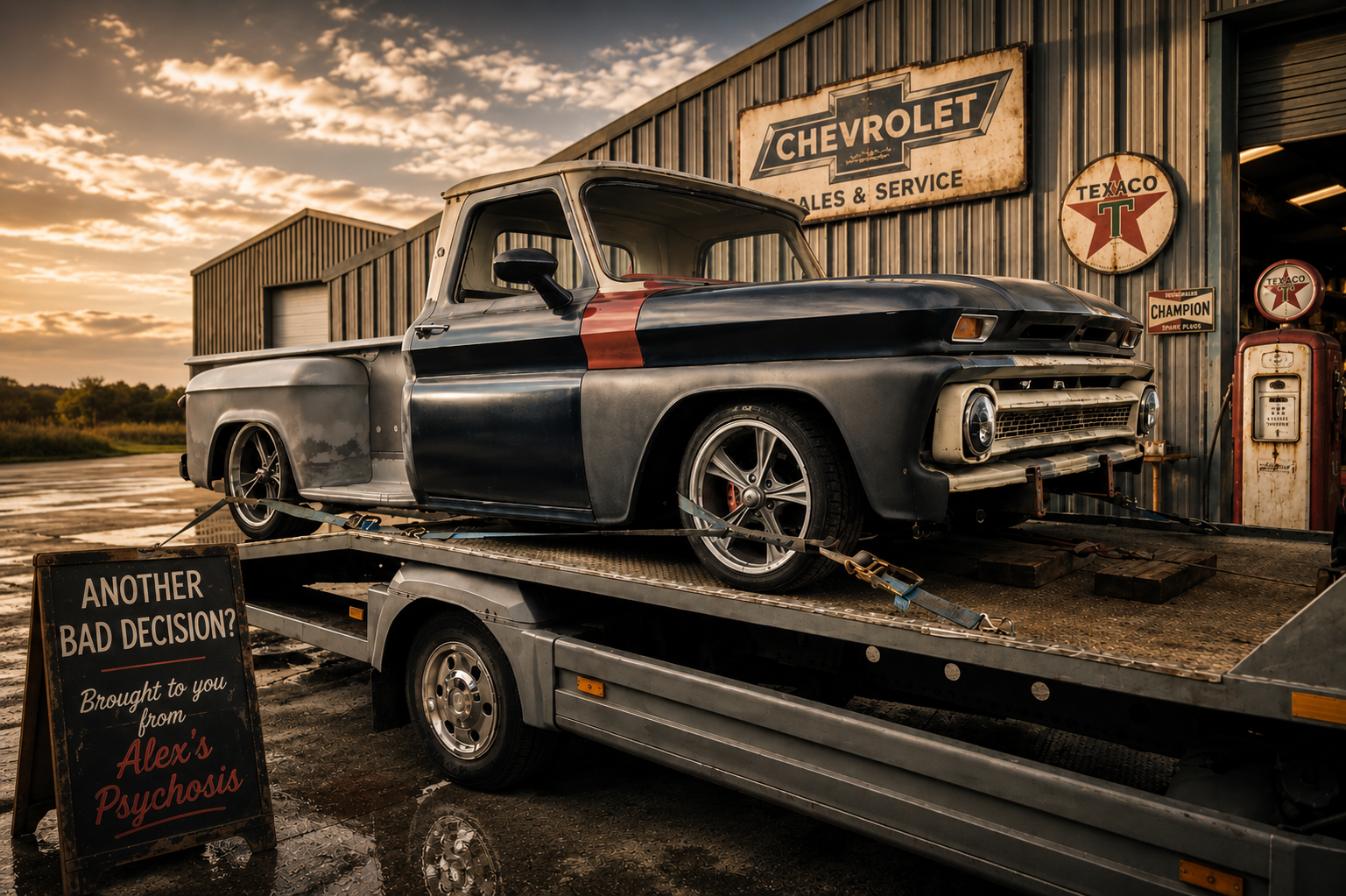
    The 1966 Chevrolet C10

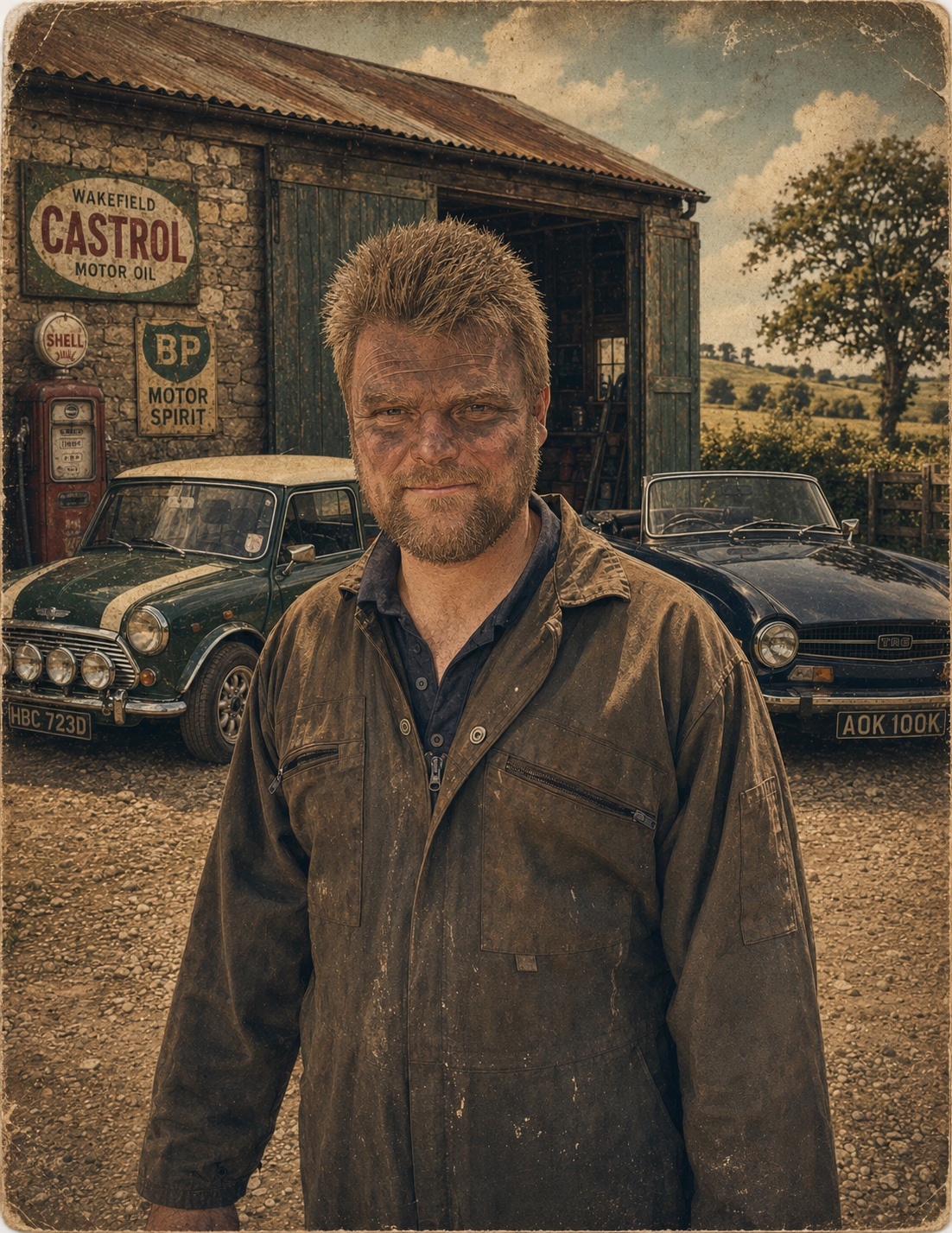
    First off – a bit about me. I’m good at my job, as bold as that may sound. Nearing twenty years now in the classic car restoration game, having restored a number of British classics professionally – Triumph TR4, 5 and 6’s, E Types, big Healeys, small MG’s as well as an award winning 1989 Range Rover Vogue. I grew up in, around and underneath classic cars. I’ve borne witness to multiple restorations by other outfits, helped along the way in a number of cases. And every. Single. Time. it follows the same pattern.

    A year long timescale of a restoration looks something like this:

    • Months 1-3: we’re off. Spec and scope agreed. Disassembly, parts catalogued, shell may be blasted, progress is tangible and rapid.
    • Months 4-6: in the case of the Chevy, the ‘dry build’ happens here. In most cases, it’s reconstruction phase. The rot is three times as bad as you thought it was, and repair panels never, ever fit. Cue much swearing, welding burns, slippage and scope creep.
    • Months 6-9: If your buttons are done up, chrome and trim happens here, alongside any upholstery work that can be carried out alongside what you ought to be doing in the workshop. This could be prep and paint.
    • Months 9-12: The paint will be late. The trimmer won’t have quite finished, and the poor mechanic will be chewing his fingernails off, knowing that the deadline has been and gone. Seeds of discontent are sown here, as the bills inexorably pile up, and the client struggles to see what he’s got for his money.
    • Months 12-15: The mechanic gets the opportunity for some heroics, as engines are swinging from cranes, the big stuff starts getting bolted on and the car starts to look like, well, a car… The knot in the clients stomach eases a little, although painful, the end is surely in sight.
    • Months 15-18: Impatience sets in. We’re all aware the clock is ticking, made worse because it actually looks like a car here. Tantalising, tempting… We’re all exhausted. Our eyes close at night we all see the silhouette of the car inside our eyelids.
    • Months 18-21: Snagging. Snagging. Replacing new parts that don’t work, with cleaned, polished, refurbed or reengineered old ones that somehow are still superior quality. Swearing, impatience, scope creep and regret creep in. The handover of the project is spoiled by missed deadlines and never quite enough time to settle the car down. A few weeks of back-and-forth between the workshop and the owners home, before Winter and a sheet is thrown over the car until next spring. When it will require recommissioning.

    Sold yet?

    Where we started

    No, nor would I be on the face of it. Every day the car is away from home is a problem, however necessary. It would be better to think about a car restoration in the same way one might contemplate a house restoration. Smaller in tangible size, but intricate to make up for it. A similar range of skills required but far, far less margin for error – you see absolutely every detail. And, the older the house, the more bodges there are to undo. The more rot is hidden.

    The more bespoke you go, the more complex the job. Every additional component needs a bracket. Everything electrical needs another wire. Or two. Or five. And every individual wire needs cutting, soldering, heat shrinking, routing and terminating. Timescale? First thing to go out the window. Closely followed by the budget as we, the willing, led by the unknowing, doing the impossible for the ungrateful, do so much with so little for so long, end up qualified to do anything with nothing… Something like that, anyway!

    I should go on record and say that Mr C10 is respectful, appreciative and understanding of what I’m doing here, if a little… Tired, now.

    But.

    To consider a restoration in purely the black and white would be to miss the point: it lives and dies in the grey. There is another truth, that every. Single. Car. That I’ve been involved in the restoration of, is rarely just that – a car.

    It’s a moment in time. A realisation of a dream. A connection to a time or place that meant something. Cars, to car people, are more than just a heap of wires and metal used to make commuting easier. They capture the essence of something – either a nostalgic throwback, or an extension of our personality. You can, in fact, tell a lot about a person by their car. Even if it’s a ‘white good’ car to the point it’s a statement – you don’t care about cars, therefore we can infer you are pragmatic, apathetic or (whispers) boring. Your car is a mirror – think about that, and look outside onto your driveway – what does your car say about you?

    A Morris Minor. Characterful, cheerful, full of charm.

    A Jaaaag. Loveable rogue. Falling apart.

    A Land Cruiser. Farmer.

    A Land Rover. Wanting to look like a farmer.

    An Isuzu D-Max. Actually a farmer.

    A Lamborghini. Powerful. Rich. Not very well endowed.

    Every single car is a statement, whether you like it or not. Even a car that is ‘image free’ is telling everyone you ‘don’t care about your image’.

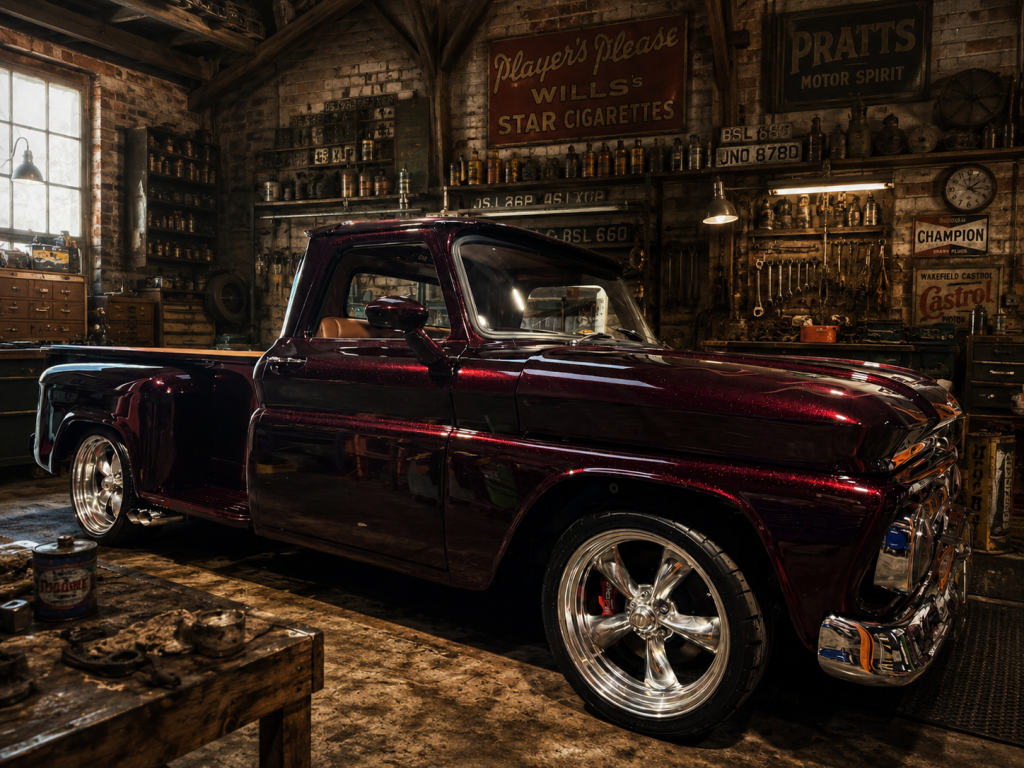
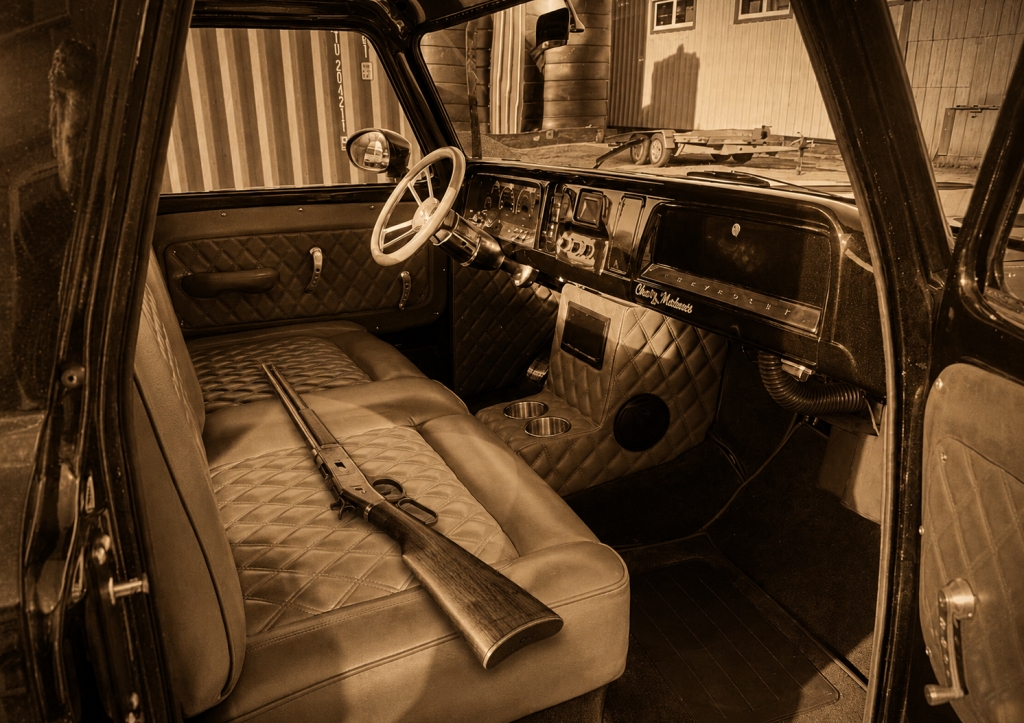
    The Chevrolet C10 is in fact, the realisation of a childhood dream, where a similar car sat on a corner near to where the owner lived. Built to be the wildest, most extreme form of hot rod it could be, the brief was non-exhaustive, from the LS3 engine to the replica Winchester hanging behind the drivers head.

    Cos, why wouldn’t you?

    The finished product is stunning. But the middle bit, was serious graft. Testing my skills and abilities to the absolute limit – I picked the job up after the previous builder had stalled the project. The challenges there were unimaginable – not knowing where the previous builder had finished and we were to begin, how much had he finished ‘properly’, how much needed remaking? Fortunately, the quality of the workmanship was very high. But unfinished – so it left me with some of the tricky still – making wiring looms from scratch, commissioning the air suspension system pre and post build. One particular challenge that will be burned into my mind forevermore, was mating the late Corvette power steering pump to the vintage spec power steering box. Necessary because the parts had already been purchased, they were expensive, imported from America (lead time becomes an issue) and a mismatch, resulting in overpowering the steering box and blowing the bottom out of it. I had to design and make an adjustable, external pressure relief system… Routing through and oil cooler, a swirl pot and a complex network of high pressure hoses necessary to reduce pressure and prevent cavitation. For a power steering pump!

    Can you see how this fits into my year-long timescale?

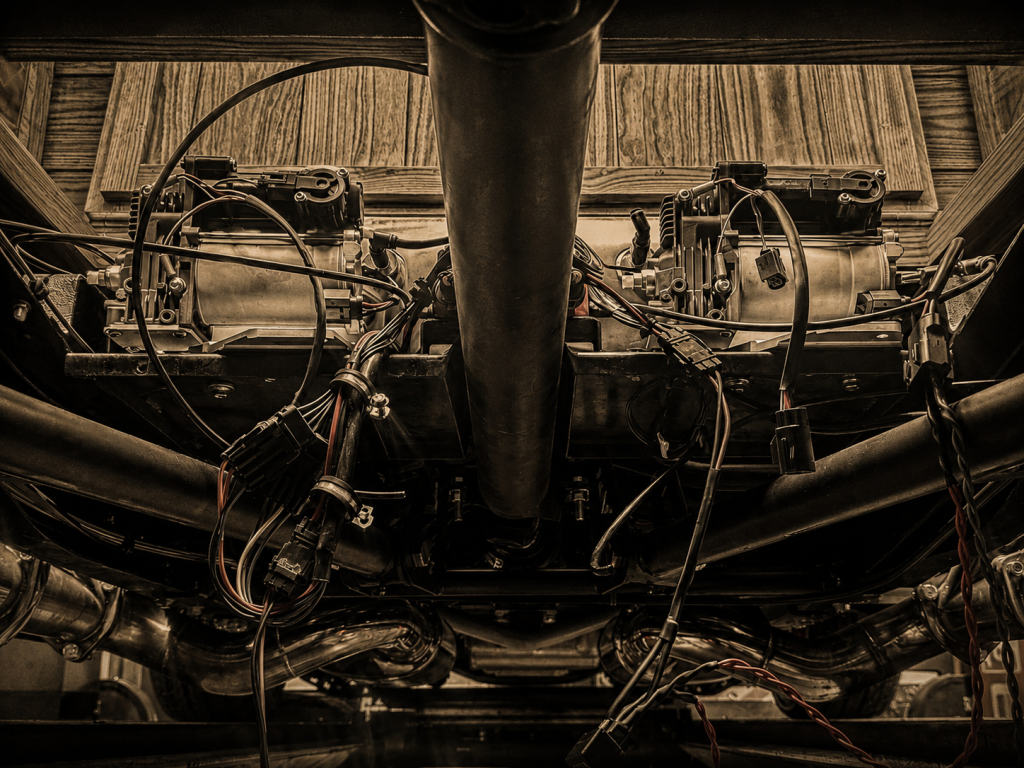
    The latest component failure is the (customer supplied) inadequate and poor quality, Chineseium suspension compressors failed and dumped the truck on the floor. So, I’ve upgraded to Discovery 3 spec items – two of them – necessitating all new pipework, wiring through relays and recalibration.

    The speedometer – another adventure, it took me a little longer than it should have to understand that the factory loom and sensors do not support a speedometer input, so grafting in a GPS sensor was the order of the day…

    Mighty compressor setup on the way

    On the road? It’s absolutely insane. Over 500bhp with next to no weight on the rear. Mad, candy red paint, 22 feet long, ghost flames on the bonnet and switchable exhausts from loud to AC/DC-at-full-tilt-playing-in-your-bedroom, it’s going to be noticed. What might not be noticed are the details I’m most proud of. The epic wiring loom that you can’t see. The bespoke brake pipes, the stainless steel fasteners, the hours and hours on wiring – did I mention that? My work has mostly been like your home broadband. It’ll be doing its job if nobody talks about it, in the end.

    What I hope they do talk about, is the bespoke buck liner where every strip of wood is cut from the same grain – so wheel arch liners and hatch for the air suspension servicing all follow.

    It’s a rare thing for a machine like this to exist based on decisions that my own tired, worn out hands made along the way.

    We’re there now. To consider only the time and the money would be to miss the point of restoration – to bring a dream alive. To connect the owner with a moment in history. To wear, as a badge of achievement for how far he has come in life to enable such a thing. It’s amazing. Truly, it’s been a pleasure.

    It is, however, time for it to go home. Let some other car can occupy the inside of my eyelids for a while.

    Done
  • Breaking the Third Wall – Life Inside the Motor Trade

    Breaking the Third Wall – Life Inside the Motor Trade

    Up there in the list of “things people say to me most often” is the question: “My son would like to get into the motor trade. Any advice?”.

    It’s not number one on that list. That’s probably something along the lines of “Cheer up, it might never happen…” or, “Are you feeling okay?”. Most commonly, “F**k me, you look ill. Have you seen a doctor recently?”. To which the answer is, of course not, we live in the UK…

    I am usually moved to ask why. Then follows a soliloquy explaining that he’s “Always loved cars” and “Is very good with his hands, very practical around the house”…

    You’ve described twelve year old me too, and I’d like to share with you some experience, to give you some insight into what might be in store for you or your son/daughter if they show ambition to embark on a career fixing the most complex piece of kit that most of us will ever buy: the motor car.

    I’ll take you back approximately thirty three and a half years, to my christening. More specifically, the party that clearly followed it. My Dad, holding me cradled in one arm, a smoke between his fingers and a pint in the other hand, swaying slightly from foot to foot. Tie removed, too many buttons undone on the once-crisp, white shirt, and these immortal words leaving his lips as the camera pans to put him in the frame. “…I’ll tell you one thing for sure boys, he is not – he is not – going into the motor trade…” That’s how my godfather, fellow veteran of the trade, tells it anyway.

    By this point, Dad was a fifteen year veteran of the trade himself, and about the same age I now find myself. I’ve only just realised that, as I’ve typed it. Strange, really…

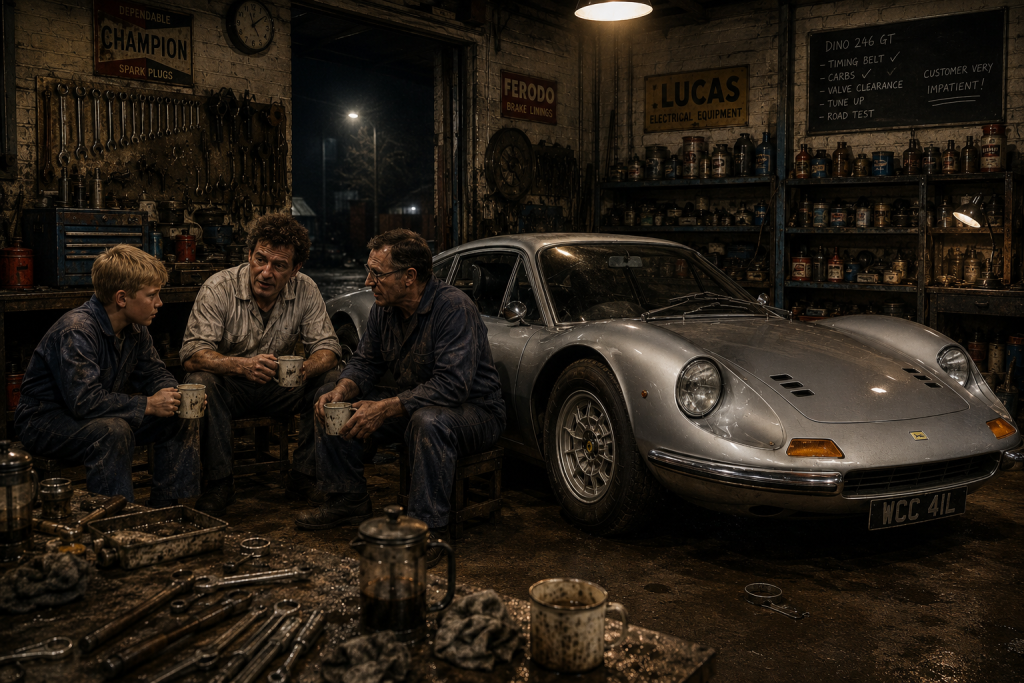
    Less-than-subtle warning shots would continue to be fired across my boughs as I got older. At something like twelve, I was with Dad and one of his friends in the early hours of the morning. Struggling to meet a deadline at the conclusion of a restoration on a Ferrari Dino, no less. I was helping – making tea and coffee, holding torches and fetching tools from the piles of tools that were scattered around the undeniably beautiful, silver, ‘Chairs and Flares’ Dino that sat in the middle of our tumbledown workshops. We stopped for a cup of coffee at about 3am, and silence fell in the office, broken only by the clicking lighters and deep drags on cigarettes. Two men and me, covered in oil. Eyes red, backs hurting I’m sure – mine certainly was, even then.

    Dad’s friend who had been drafted in to help push the car to completion, without looking at me, asked me a question. Staring in a trance, fixated on the wall perpendicular to me, he asked “What do you want to do when you grow up, Alex?” I answered very definitely. “Well. I love cars, I love what my Dad does. I want to work with cars.” “Oh.” Says the friend. He takes a slow, tired swig of coffee from a cup covered in oily fingerprints. “See a lot of happy people in this trade, do you?”.

    ‘The’ Dino

    Fast forward a few years. Something like seventeen years old, and I was still hanging on in there at the sixth form college attached to the high school I’d attended. More certain than ever that my future lay outside the realms of academia, and in a pair of oily jeans. I’d already started, had been wheeling and dealing in cars on the weekends with Dads help. Considering he really wanted me to go to university, he did a fairly good job of subtly encouraging me to follow in his footsteps. His actions did not, in fact, mirror his words. And I was very happy skiving off a few lessons here and there to head over to the workshop and spend some time earning a few quid. I’ve always been addicted to work, and I’m probably kidding myself even now if my future lays outside doing something with my hands, truth be known.

    I was happy, genuinely. I’d more or less concluded that the drawbacks those two guys with their three-am coffees were talking about were the long hours. The late nights, the cold conditions, the physicality of the trade that really is hard on the body. I took a certain pride in that, in fact: Dirty hands, clean money. Not only that, but it was broadening my shoulders and giving me a certain swagger – walking into the pub with a pocket full of the folding stuff never got old, especially at seventeen. I wore my injuries and scars like badges of honour, symbols of a hard days work done well. I still do, to be honest; Each one has a story – this one when a grinding disc exploded, that one from a rusty sill I was welding up. Seldom did I have a full set of fingernails, and I never really minded.

    There’s a sense of pride that comes from manual labour in this industry too. From a job well done, even if it’s in an area that the customer will never see – you sleep soundly knowing that everything you’ve done is just right. I’ve developed my calibrated elbow to the point that I don’t really need a torque wrench any more, though of course, I still use one where it matters.

    Three more years go by, and my Dad get’s his brain tumour. Devastating for the whole family, on a whole number of levels. From a career point of view, I was having a lot of fun just prior to that. Buying, selling and fixing cars, I’d also picked up an ad-hoc commercial vehicle maintenance income stream that combined still left me with enough time to maintain my race car, and enough money in my pocket to invest in my new family (see my previous post the Edge of Seventeen for that story). I kept his workshop going and the doors open initially, not knowing that he wouldn’t come back and carry on his life. By the time it was clear that he wouldn’t, I was so heavily invested in the workshop, there was no turning back. And I was slowly but surely, coming to realise what the three-am coffee club were really talking about…

    The motor trade in my experience, is only about fifty per cent about fixing, servicing and maintaining cars. The other fifty percent is all about managing human psychology. I suspect that applies across all aspects of modern human life – no-one completely escapes the need to deal with other humans entirely if they are to navigate life. So why is it different?

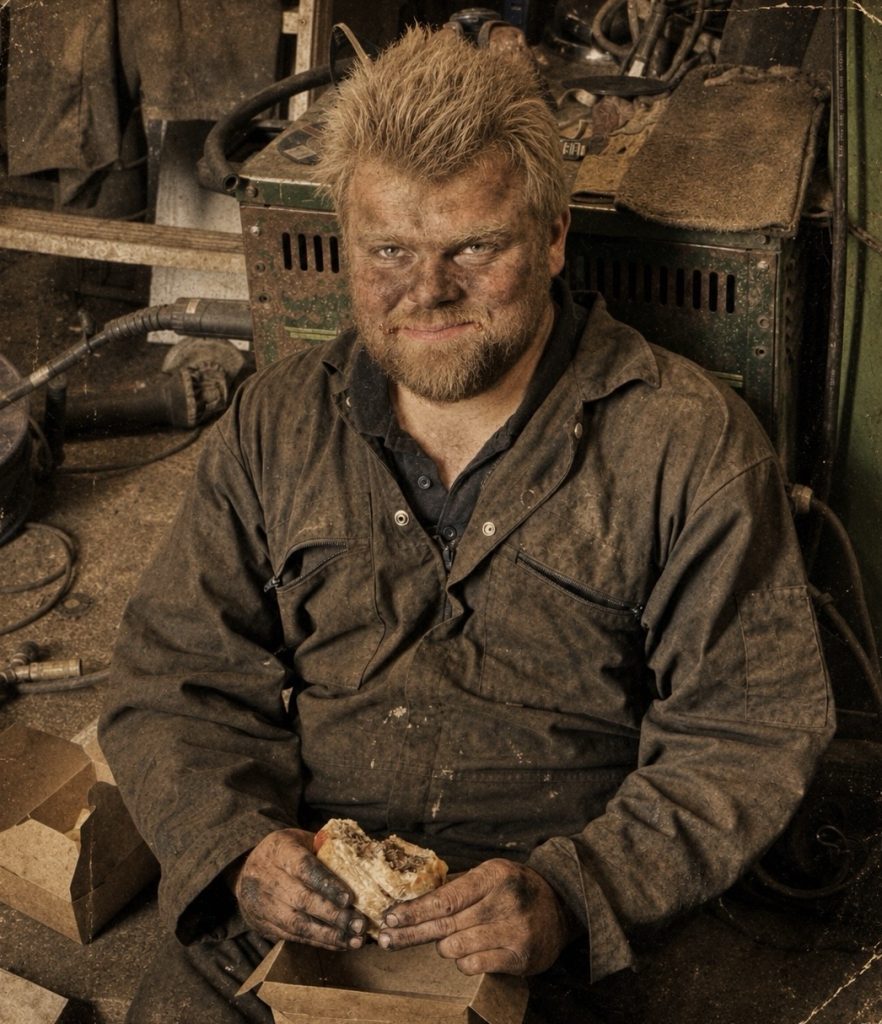
    An Innate Ability to Get Covered in Stuff

    If you think about it, some of the answers could have been inferred from that three-am Ferrari Dino session. And in my Dads proclamation about my future career at my Christening. The clues are all there, but until about ten years into my career, I’d missed them. Even in my twelve year old head, clearly it was ridiculous to be pulling a twenty hour work day, before getting up at eight o’clock in the morning the same day to do it all over again. And re-do some of the mistakes that had been made with bleary eyes and tired hands, as I recall… In the moment, my junior mind computed only a kind of heroism in it. The three of us as a team, working together, an us-against-the-world kind of vibe. Men, primal I suppose, pulling together to slay a beast mightier than ourselves (the Dino). But I’d missed the other, deeper dynamic.

    We were doing it because even Dad, the strongest man in any room he ever entered as far as I was concerned, was answerable to a higher power. I would meet a number of these higher powers in my life too. Customers.

    The slickest, sharpest man I ever knew was still answerable to a customer. He kept my Dad sleep deprived, worn down and emotionally drained like no-one I’d ever seen before. What him to keep going that long into the night?

    Money. First and foremost. An unpaid bill. A car restoration is a constantly evolving, unmanageable project. An untameable beast with a thousand steps on the critical path, a thousand unknowns and a thousand opportunities for delay in the schedule. Component failure, third party services not meeting expectations, quality control issues from handmade and irreplaceable parts, all before you consider the human factor. In fact, he couldn’t have a human factor. Stress at home, illness, personal circumstances all become irrelevant once the customer has parted with money, he owned not just the car, but Dad. He held back paying when it suited – if he was travelling, if he was tight himself, if he was fed up because this untameable beast was kicking and screaming its way to the finish line – he’ll not pay. Dad’s bills were from the discretionary income pot, and usually sizeable in relative terms – so his were the first ones to go in the ‘pay later’ pile if there was an issue. And because the job was untameable, our estimates would never be enough, there were so many hands out for our money that he hadn’t got enough to survive on himself. You might think you’ll escape this by working for a company rather than owning it, but the above dynamic keeps the wages perennially low in comparison to other manual labour-based trades. And, you’ll have to cope with a justifiably bad-tempered boss.

    What I mean is, the socio-economic relationship between customers and mechanics is in fact a high wire act for the man managing it.

    I realise that most of my experience is around restoration rather than repair, but even on a small job, the risk is off the scale. Particularly nowadays, where a motor factor sending out the wrong can of oil can result in eventual failure of a dreaded wet belt or some such. A small job with a profit margin of twenty or thirty pounds carrying all that risk… The halcyon days of the motor trade are long behind us, with the complexity of modern machinery demanding ever more expensive equipment to deal with. The customer psychology changes too in routine jobs, from something they want to have done, to a necessary evil. You might be the difference between expensive engine rebuilds and inexpensive, thorough and skilled maintenance, but in their mind, you are that necessary evil.

    Profit margins erode too as rent, rates and insurance skyrocket year on year. You haven’t even paid the government yet, who still take their piece of this non-existent pie. But woe betide you if you charge £50 for a diag… You’ll end up on a forum or Facebook local community page, with customers comparing invoices from similar outfits doing ‘similar’ jobs – as if there could be such a thing.

    Customers self-diagnosing and pastiches of having ‘a mate that could do it cheaper quicker better’ is also a reality. What the ‘memes’ don’t go on to explain is how, even if the customer self-diagnoses, provides the parts, you fit them, and it doesn’t solve their problem, it’s still ‘your fault’.

    Circa 1989 – Dad

    So, why do I do it?

    It’s a good question. I’m wrestling with it now. It’s all I know, I suppose. It’s in the fabric of my identity. It’s, ‘what I do’, like when it rains and you get wet, or how the sun will set in the evening. It has that way about it, the motor trade, like the oil under your fingernails that never really comes off. You wear the trade on your clothes, in your aching back and in your funny walk with your permanent slight limp. The scars on your hand like badges of honour, if you recall.

    And sometimes, you have a good day. You build something or make something or overcome some unsolvable problem, and you’ll have that warm, fuzzy, satisfied feeling. Sometimes, the sun will come out and you can work outside, warming your bones and taking some of the tension out of your back for a while.

    And I should say to be fair and truthful, a greater number of the customers I’ve worked with for years, I’ve enjoyed building something very special – cars and friendships. It’s never been about ‘what I work on’ for me, the satisfaction comes from ‘who I work with’. That distinction I suppose is the salvation of the working day. For me, as a big softie, an emotional kind of guy, it’s the thing that makes it worthwhile – bringing a dream to reality for someone who’s on the journey with you, not against you.

    I think what I’m trying to say is you have to have a constitution of a certain kind. I’m not sure I have it. Beyond thick skin; an ability to close the workshop door and leave it all there – on yet another late Saturday evening, go home to your disappointed wife, and your children who were asleep when you left, and asleep when you trudge through the door.

    The motor trade is one of the last bastions of ‘the ‘real man’ mentality. By which I mean, standing alone with broken bodies and minds, self medicating with beer and cigarettes. The construction industry about twenty years ago at least seems to acknowledge some of this, establishing a universal pricing structure stopping ruthless undercutting. There’s a different camaraderie between trades, from the outside looking in at least – maybe because it’s because each one knows what the other does best and works alongside each other. Garages, with a few exceptions, work in isolation and tear each other down. Good or bad, it’s very rare to hear another motor trader complimenting another’s work, default is usually vehemently the opposite.

    A quick Google search “mental health support in construction” reveals page upon page of hotlines, charities, even pages from the government website supporting wellbeing within the industry. Replace ‘construction’ with ‘motor trade’ and what do you get? One independent charity, and a hundred articles on how some more support would be a good idea. Some claim that fifty per cent of motor industry workers suffer with mental health issues. I’d be surprised if it was that low – you probably acquire them to survive it.

    Some of the most useful advice a good friend gave recently is to draw hard red lines around what you will do; what you won’t do; and when it’s up for discussion, regardless of the financial or psychological pressure – from whichever stakeholder it comes from.

    Maybe, you develop the constitution over time, and that hard, cold exterior creeps into every corner of your life until you’re twice divorced, fifty years old, looking seventy, and feeling ninety.

    One way of dealing with it might be to switch three-am coffee drinking for two-am blog writing… This piece isn’t taking aim at anything in particular, it’s just an expression of my loss of the ability to romanticise the dynamic any more. I hope it’s temporary – time will tell.

    So, if you want to join the motor trade, be warned. It will be fulfilling and creative, challenging and brutal, all at the same time. If you survive it, it will make you hard, weary, cynical and probably single. You’ll work with some fabulous people, the best of which will be equally cynical. Brothers in arms, if you will.

    You’ll see the best of human nature, and the worst. You’ll meet people who build you up, and people who tear you down. And some who defy logic and reason so vehemently you wonder how Darwin’s theory of evolution could possibly have created them.

    You must be prepared to sacrifice more than you think you have, to a trade that relentlessly takes more than it gives, and keep finding it in yourself to put on your steelies and have at it.

    There’s always McDonalds though, eh?