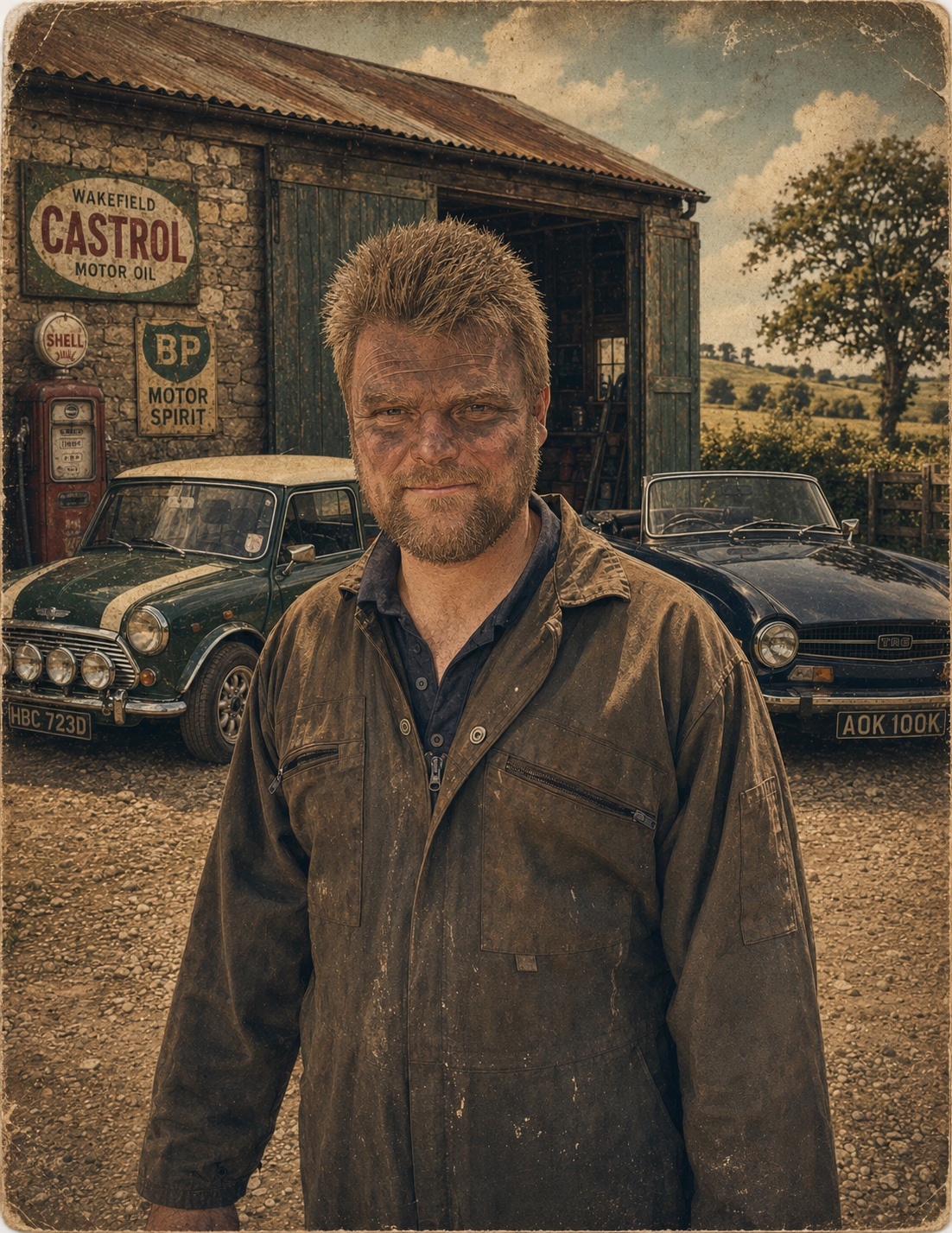
Up there in the list of “things people say to me most often” is the question: “My son would like to get into the motor trade. Any advice?”.
It’s not number one on that list. That’s probably something along the lines of “Cheer up, it might never happen…” or, “Are you feeling okay?”. Most commonly, “F**k me, you look ill. Have you seen a doctor recently?”. To which the answer is, of course not, we live in the UK…
I am usually moved to ask why. Then follows a soliloquy explaining that he’s “Always loved cars” and “Is very good with his hands, very practical around the house”…
You’ve described twelve year old me too, and I’d like to share with you some experience, to give you some insight into what might be in store for you or your son/daughter if they show ambition to embark on a career fixing the most complex piece of kit that most of us will ever buy: the motor car.
I’ll take you back approximately thirty three and a half years, to my christening. More specifically, the party that clearly followed it. My Dad, holding me cradled in one arm, a smoke between his fingers and a pint in the other hand, swaying slightly from foot to foot. Tie removed, too many buttons undone on the once-crisp, white shirt, and these immortal words leaving his lips as the camera pans to put him in the frame. “…I’ll tell you one thing for sure boys, he is not – he is not – going into the motor trade…” That’s how my godfather, fellow veteran of the trade, tells it anyway.
By this point, Dad was a fifteen year veteran of the trade himself, and about the same age I now find myself. I’ve only just realised that, as I’ve typed it. Strange, really…
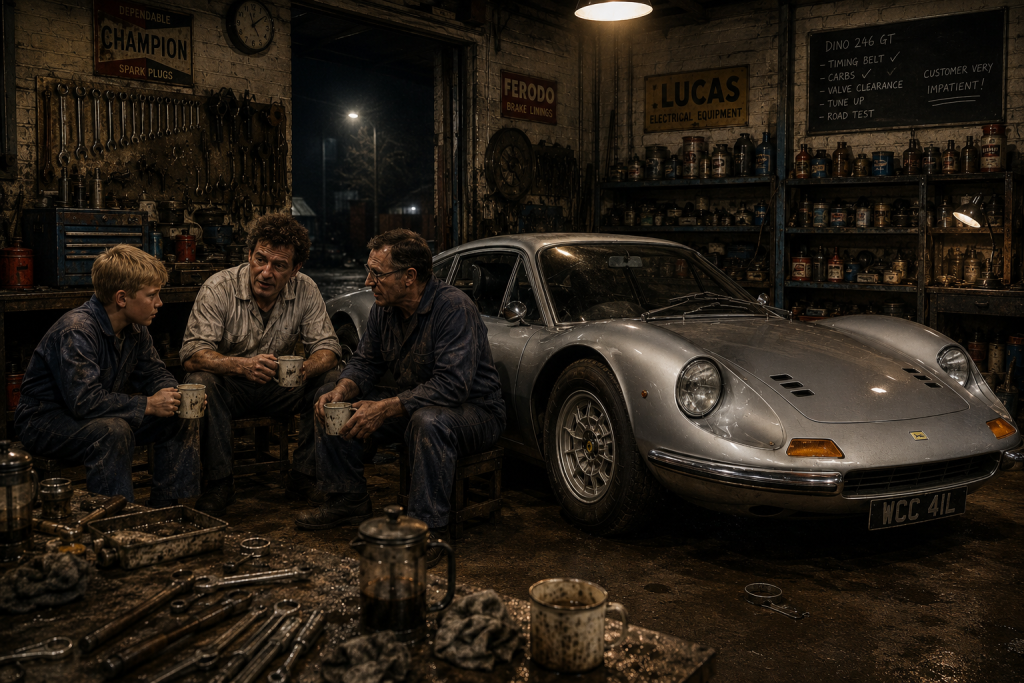
Less-than-subtle warning shots would continue to be fired across my boughs as I got older. At something like twelve, I was with Dad and one of his friends in the early hours of the morning. Struggling to meet a deadline at the conclusion of a restoration on a Ferrari Dino, no less. I was helping – making tea and coffee, holding torches and fetching tools from the piles of tools that were scattered around the undeniably beautiful, silver, ‘Chairs and Flares’ Dino that sat in the middle of our tumbledown workshops. We stopped for a cup of coffee at about 3am, and silence fell in the office, broken only by the clicking lighters and deep drags on cigarettes. Two men and me, covered in oil. Eyes red, backs hurting I’m sure – mine certainly was, even then.
Dad’s friend who had been drafted in to help push the car to completion, without looking at me, asked me a question. Staring in a trance, fixated on the wall perpendicular to me, he asked “What do you want to do when you grow up, Alex?” I answered very definitely. “Well. I love cars, I love what my Dad does. I want to work with cars.” “Oh.” Says the friend. He takes a slow, tired swig of coffee from a cup covered in oily fingerprints. “See a lot of happy people in this trade, do you?”.
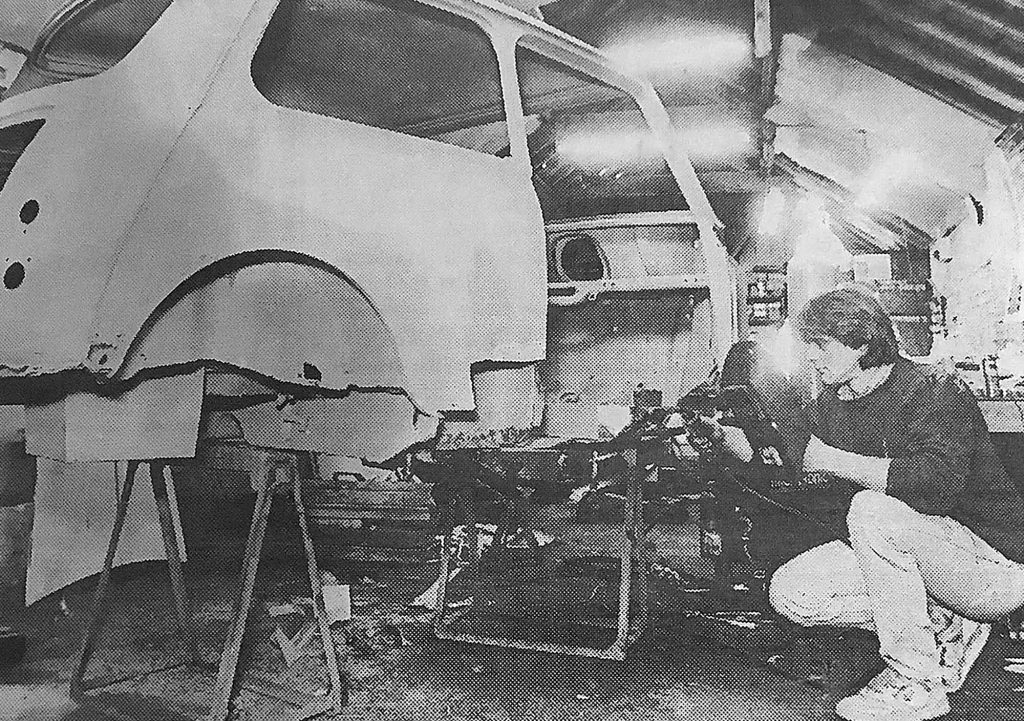
Fast forward a few years. Something like seventeen years old, and I was still hanging on in there at the sixth form college attached to the high school I’d attended. More certain than ever that my future lay outside the realms of academia, and in a pair of oily jeans. I’d already started, had been wheeling and dealing in cars on the weekends with Dads help. Considering he really wanted me to go to university, he did a fairly good job of subtly encouraging me to follow in his footsteps. His actions did not, in fact, mirror his words. And I was very happy skiving off a few lessons here and there to head over to the workshop and spend some time earning a few quid. I’ve always been addicted to work, and I’m probably kidding myself even now if my future lays outside doing something with my hands, truth be known.
I was happy, genuinely. I’d more or less concluded that the drawbacks those two guys with their three-am coffees were talking about were the long hours. The late nights, the cold conditions, the physicality of the trade that really is hard on the body. I took a certain pride in that, in fact: Dirty hands, clean money. Not only that, but it was broadening my shoulders and giving me a certain swagger – walking into the pub with a pocket full of the folding stuff never got old, especially at seventeen. I wore my injuries and scars like badges of honour, symbols of a hard days work done well. I still do, to be honest; Each one has a story – this one when a grinding disc exploded, that one from a rusty sill I was welding up. Seldom did I have a full set of fingernails, and I never really minded.
There’s a sense of pride that comes from manual labour in this industry too. From a job well done, even if it’s in an area that the customer will never see – you sleep soundly knowing that everything you’ve done is just right. I’ve developed my calibrated elbow to the point that I don’t really need a torque wrench any more, though of course, I still use one where it matters.
Three more years go by, and my Dad get’s his brain tumour. Devastating for the whole family, on a whole number of levels. From a career point of view, I was having a lot of fun just prior to that. Buying, selling and fixing cars, I’d also picked up an ad-hoc commercial vehicle maintenance income stream that combined still left me with enough time to maintain my race car, and enough money in my pocket to invest in my new family (see my previous post the Edge of Seventeen for that story). I kept his workshop going and the doors open initially, not knowing that he wouldn’t come back and carry on his life. By the time it was clear that he wouldn’t, I was so heavily invested in the workshop, there was no turning back. And I was slowly but surely, coming to realise what the three-am coffee club were really talking about…
The motor trade in my experience, is only about fifty per cent about fixing, servicing and maintaining cars. The other fifty percent is all about managing human psychology. I suspect that applies across all aspects of modern human life – no-one completely escapes the need to deal with other humans entirely if they are to navigate life. So why is it different?
If you think about it, some of the answers could have been inferred from that three-am Ferrari Dino session. And in my Dads proclamation about my future career at my Christening. The clues are all there, but until about ten years into my career, I’d missed them. Even in my twelve year old head, clearly it was ridiculous to be pulling a twenty hour work day, before getting up at eight o’clock in the morning the same day to do it all over again. And re-do some of the mistakes that had been made with bleary eyes and tired hands, as I recall… In the moment, my junior mind computed only a kind of heroism in it. The three of us as a team, working together, an us-against-the-world kind of vibe. Men, primal I suppose, pulling together to slay a beast mightier than ourselves (the Dino). But I’d missed the other, deeper dynamic.
We were doing it because even Dad, the strongest man in any room he ever entered as far as I was concerned, was answerable to a higher power. I would meet a number of these higher powers in my life too. Customers.
The slickest, sharpest man I ever knew was still answerable to a customer. He kept my Dad sleep deprived, worn down and emotionally drained like no-one I’d ever seen before. What him to keep going that long into the night?
Money. First and foremost. An unpaid bill. A car restoration is a constantly evolving, unmanageable project. An untameable beast with a thousand steps on the critical path, a thousand unknowns and a thousand opportunities for delay in the schedule. Component failure, third party services not meeting expectations, quality control issues from handmade and irreplaceable parts, all before you consider the human factor. In fact, he couldn’t have a human factor. Stress at home, illness, personal circumstances all become irrelevant once the customer has parted with money, he owned not just the car, but Dad. He held back paying when it suited – if he was travelling, if he was tight himself, if he was fed up because this untameable beast was kicking and screaming its way to the finish line – he’ll not pay. Dad’s bills were from the discretionary income pot, and usually sizeable in relative terms – so his were the first ones to go in the ‘pay later’ pile if there was an issue. And because the job was untameable, our estimates would never be enough, there were so many hands out for our money that he hadn’t got enough to survive on himself. You might think you’ll escape this by working for a company rather than owning it, but the above dynamic keeps the wages perennially low in comparison to other manual labour-based trades. And, you’ll have to cope with a justifiably bad-tempered boss.
What I mean is, the socio-economic relationship between customers and mechanics is in fact a high wire act for the man managing it.
I realise that most of my experience is around restoration rather than repair, but even on a small job, the risk is off the scale. Particularly nowadays, where a motor factor sending out the wrong can of oil can result in eventual failure of a dreaded wet belt or some such. A small job with a profit margin of twenty or thirty pounds carrying all that risk… The halcyon days of the motor trade are long behind us, with the complexity of modern machinery demanding ever more expensive equipment to deal with. The customer psychology changes too in routine jobs, from something they want to have done, to a necessary evil. You might be the difference between expensive engine rebuilds and inexpensive, thorough and skilled maintenance, but in their mind, you are that necessary evil.
Profit margins erode too as rent, rates and insurance skyrocket year on year. You haven’t even paid the government yet, who still take their piece of this non-existent pie. But woe betide you if you charge £50 for a diag… You’ll end up on a forum or Facebook local community page, with customers comparing invoices from similar outfits doing ‘similar’ jobs – as if there could be such a thing.
Customers self-diagnosing and pastiches of having ‘a mate that could do it cheaper quicker better’ is also a reality. What the ‘memes’ don’t go on to explain is how, even if the customer self-diagnoses, provides the parts, you fit them, and it doesn’t solve their problem, it’s still ‘your fault’.
So, why do I do it?
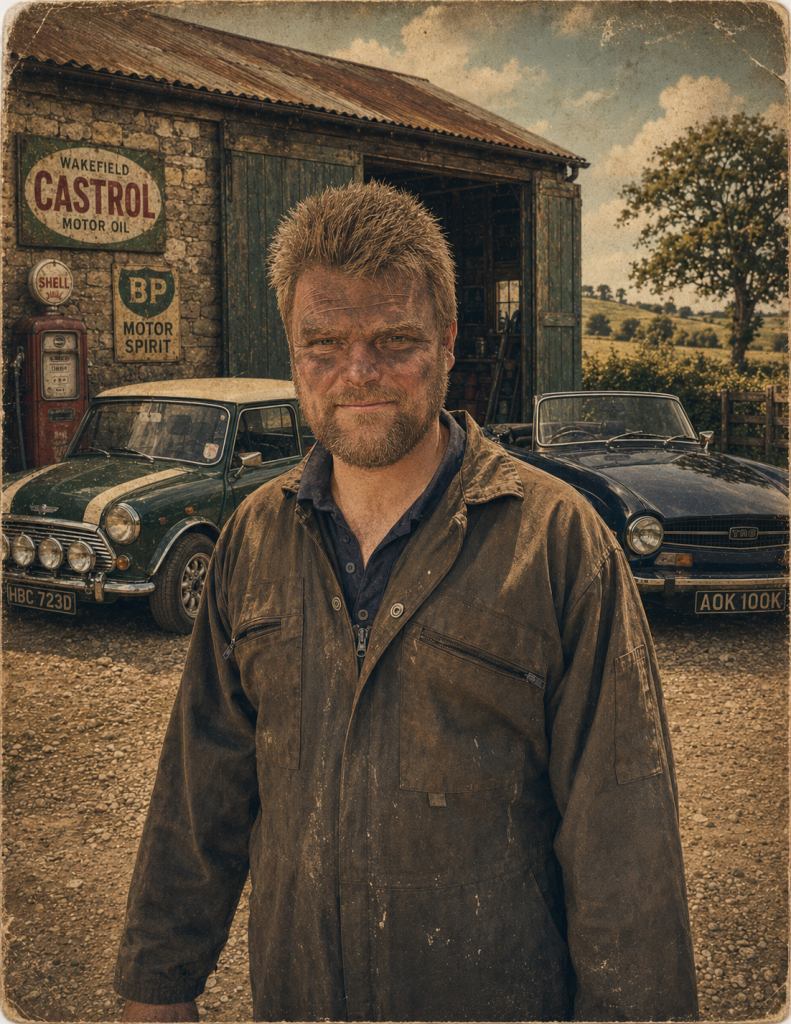
It’s a good question. I’m wrestling with it now. It’s all I know, I suppose. It’s in the fabric of my identity. It’s, ‘what I do’, like when it rains and you get wet, or how the sun will set in the evening. It has that way about it, the motor trade, like the oil under your fingernails that never really comes off. You wear the trade on your clothes, in your aching back and in your funny walk with your permanent slight limp. The scars on your hand like badges of honour, if you recall.
And sometimes, you have a good day. You build something or make something or overcome some unsolvable problem, and you’ll have that warm, fuzzy, satisfied feeling. Sometimes, the sun will come out and you can work outside, warming your bones and taking some of the tension out of your back for a while.
And I should say to be fair and truthful, a greater number of the customers I’ve worked with for years, I’ve enjoyed building something very special – cars and friendships. It’s never been about ‘what I work on’ for me, the satisfaction comes from ‘who I work with’. That distinction I suppose is the salvation of the working day. For me, as a big softie, an emotional kind of guy, it’s the thing that makes it worthwhile – bringing a dream to reality for someone who’s on the journey with you, not against you.
I think what I’m trying to say is you have to have a constitution of a certain kind. I’m not sure I have it. Beyond thick skin; an ability to close the workshop door and leave it all there – on yet another late Saturday evening, go home to your disappointed wife, and your children who were asleep when you left, and asleep when you trudge through the door.
The motor trade is one of the last bastions of ‘the ‘real man’ mentality. By which I mean, standing alone with broken bodies and minds, self medicating with beer and cigarettes. The construction industry about twenty years ago at least seems to acknowledge some of this, establishing a universal pricing structure stopping ruthless undercutting. There’s a different camaraderie between trades, from the outside looking in at least – maybe because it’s because each one knows what the other does best and works alongside each other. Garages, with a few exceptions, work in isolation and tear each other down. Good or bad, it’s very rare to hear another motor trader complimenting another’s work, default is usually vehemently the opposite.
A quick Google search “mental health support in construction” reveals page upon page of hotlines, charities, even pages from the government website supporting wellbeing within the industry. Replace ‘construction’ with ‘motor trade’ and what do you get? One independent charity, and a hundred articles on how some more support would be a good idea. Some claim that fifty per cent of motor industry workers suffer with mental health issues. I’d be surprised if it was that low – you probably acquire them to survive it.
Some of the most useful advice a good friend gave recently is to draw hard red lines around what you will do; what you won’t do; and when it’s up for discussion, regardless of the financial or psychological pressure – from whichever stakeholder it comes from.
Maybe, you develop the constitution over time, and that hard, cold exterior creeps into every corner of your life until you’re twice divorced, fifty years old, looking seventy, and feeling ninety.
One way of dealing with it might be to switch three-am coffee drinking for two-am blog writing… This piece isn’t taking aim at anything in particular, it’s just an expression of my loss of the ability to romanticise the dynamic any more. I hope it’s temporary – time will tell.
So, if you want to join the motor trade, be warned. It will be fulfilling and creative, challenging and brutal, all at the same time. If you survive it, it will make you hard, weary, cynical and probably single. You’ll work with some fabulous people, the best of which will be equally cynical. Brothers in arms, if you will.
You’ll see the best of human nature, and the worst. You’ll meet people who build you up, and people who tear you down. And some who defy logic and reason so vehemently you wonder how Darwin’s theory of evolution could possibly have created them.
You must be prepared to sacrifice more than you think you have, to a trade that relentlessly takes more than it gives, and keep finding it in yourself to put on your steelies and have at it.
There’s always McDonalds though, eh?
Leave a Reply